
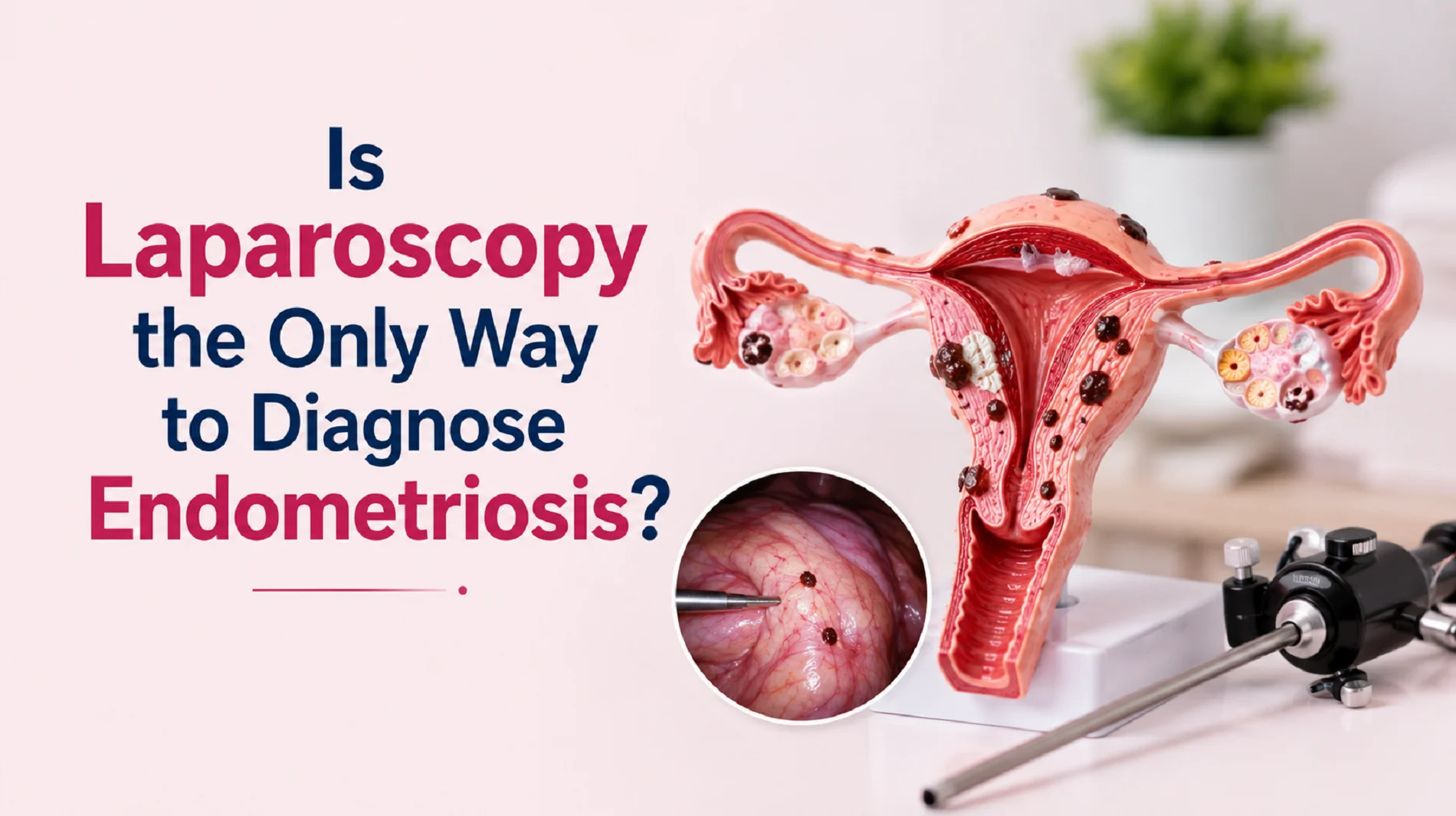
Is Laparoscopy the Only Way to Diagnose Endometriosis?
For many women, the journey to an endometriosis diagnosis is longer than it should be.
It often begins with painful periods that are dismissed as "normal." Then comes pelvic pain that keeps returning month after month. Some women struggle with pain during intercourse, while others discover the condition only when they're trying to conceive.
One of the most frustrating moments is hearing:
"Your ultrasound looks normal."
Naturally, the next question is:
"If my scans are normal, does that mean I don't have endometriosis?"
Not necessarily.
This is one of the biggest misconceptions surrounding endometriosis. While ultrasound and MRI are valuable diagnostic tools, they don't detect every form of the disease. That's why many women continue to experience symptoms despite having normal imaging reports.
So, does every woman need laparoscopy to confirm endometriosis?
The answer is no—but in some situations, it remains the most accurate way to diagnose and treat the condition.
What Is Endometriosis?
Endometriosis occurs when tissue similar to the lining of the uterus grows outside the uterus, commonly affecting the ovaries, fallopian tubes, pelvic lining, and sometimes nearby organs.
Like the uterine lining, this tissue responds to monthly hormonal changes. However, because it cannot leave the body during menstruation, it may lead to inflammation, scar tissue, adhesions, and ovarian cysts known as endometriomas.
Women with endometriosis commonly experience:
- Painful menstrual periods
- Chronic pelvic pain
- Pain during intercourse
- Pain while passing stools during periods
- Difficulty conceiving
- Fatigue
It's important to remember that the severity of symptoms doesn't always match the extent of the disease. Some women with mild endometriosis experience significant pain, while others with advanced disease may have very few symptoms.
Why Doesn't Ultrasound Always Detect Endometriosis?
One of the most common questions we hear is:
"My ultrasound is normal. Could I still have endometriosis?"
The answer is yes.
Ultrasound is excellent at detecting ovarian endometriomas and advanced disease. MRI also helps identify deep infiltrating endometriosis.
However, superficial endometriosis—small, flat lesions spread across the pelvic lining—may be too tiny to appear on either scan.
This means a normal ultrasound or MRI does not rule out endometriosis. It simply means the disease wasn't visible on imaging.
When Can Endometriosis Be Diagnosed Without Surgery?
This surprises many women.
Today, doctors don't always rely on surgery to begin treatment.
In many cases, an experienced gynecologist can make a clinical diagnosis based on:
- Your symptoms
- Menstrual history
- Pelvic examination
- A targeted transvaginal ultrasound
- MRI, when required
If these findings strongly suggest endometriosis, treatment may begin without immediate surgery.
This approach helps many women find relief while avoiding an unnecessary procedure.
Why Is Laparoscopy Still Considered the Gold Standard?
Although clinical diagnosis has improved significantly, laparoscopy remains the most accurate method for confirming endometriosis.
During laparoscopy, a tiny camera is inserted through small incisions in the abdomen, allowing the surgeon to examine the pelvic organs directly.
Unlike imaging tests, laparoscopy allows doctors to:
- See endometriosis lesions directly
- Assess the extent of the disease
- Remove endometriosis tissue during the same procedure
- Release scar tissue and adhesions
- Remove endometriomas when needed
- Take a biopsy for confirmation
This makes laparoscopy both a diagnostic and therapeutic procedure.
Does Every Woman with Endometriosis Need Laparoscopy?
No.
Many women successfully manage their symptoms with medication and regular follow-up.
Laparoscopy is generally recommended when:
- Symptoms continue despite medical treatment
- Fertility evaluation requires further clarity
- An ovarian endometrioma needs surgical removal
- The diagnosis remains uncertain
- Pain significantly affects quality of life
The decision is always personalised based on symptoms, fertility goals, age, and imaging findings.
Why Early Diagnosis Matters
Unfortunately, many women live with endometriosis for years before receiving the right diagnosis.
The problem isn't just pain.
Untreated endometriosis may gradually lead to:
- Chronic pelvic pain
- Scar tissue formation
- Adhesions
- Ovarian cysts
- Fertility challenges
- Reduced quality of life
Seeking medical advice early allows treatment to begin before complications become more significant.
When Should You See a Gynecologist?
Don't ignore persistent symptoms, especially if they interfere with your daily life.
Consult a gynecologist if you experience:
- Severe menstrual pain
- Pelvic pain between periods
- Pain during intercourse
- Difficulty conceiving
- Painful bowel movements during menstruation
- Persistent pelvic discomfort despite normal scans
Remember, a normal ultrasound doesn't always provide the complete picture.
Expert Endometriosis Care at Ankura Hospital
At Ankura Hospital for Women & Children, we understand that living with unexplained pelvic pain can be physically and emotionally exhausting.
Our experienced gynecologists use a combination of clinical evaluation, advanced imaging, and minimally invasive laparoscopic surgery to accurately diagnose and manage endometriosis.
Whether your goal is pain relief, preserving fertility, or improving your quality of life, we create an individualized treatment plan tailored to your needs.