
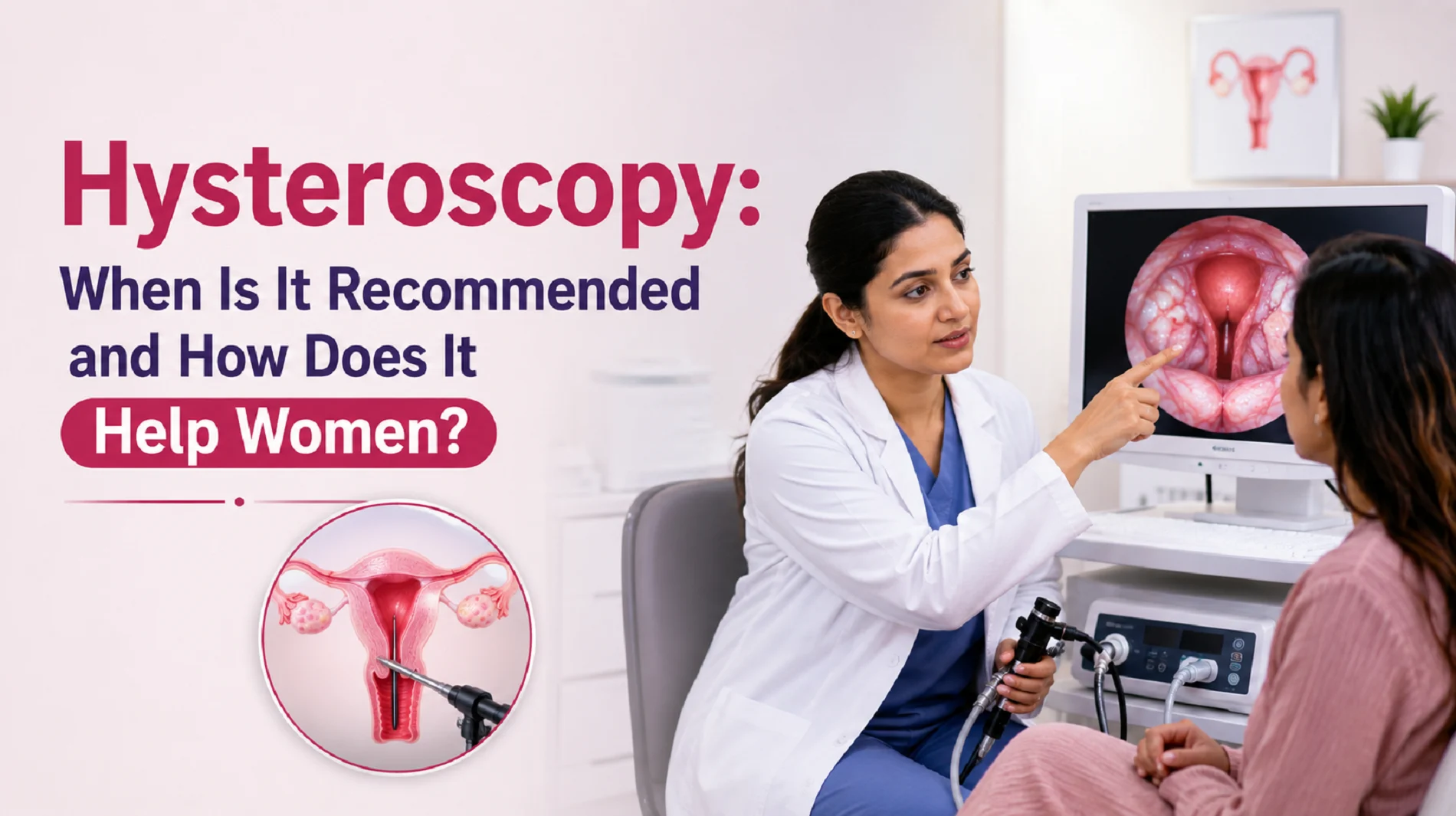
Hysteroscopy: When Is It Recommended and How Does It Help Women?
Introduction
Women's reproductive health conditions often require accurate diagnosis to ensure timely and effective treatment. While ultrasound scans provide valuable information, they may not always clearly identify problems inside the uterine cavity. In such situations, hysteroscopy offers a safe and minimally invasive way to directly examine the uterus and, in many cases, treat the underlying condition during the same procedure.
Whether you are experiencing abnormal uterine bleeding, recurrent miscarriages, infertility, or suspected uterine abnormalities, hysteroscopy can play an important role in identifying the cause and guiding appropriate treatment.
What Is Hysteroscopy?
Hysteroscopy is a minimally invasive gynecological procedure in which a thin telescope-like instrument called a hysteroscope is gently passed through the cervix into the uterus. The camera attached to the hysteroscope allows the doctor to clearly view the uterine cavity on a monitor. It is commonly used to diagnose or treat conditions affecting the uterus.
When Is Hysteroscopy Recommended?
Your gynecologist may recommend hysteroscopy if you have:
- Abnormal or heavy menstrual bleeding
- Bleeding between menstrual periods
- Bleeding after menopause
- Recurrent pregnancy loss
- Difficulty conceiving
- Suspected uterine polyps or fibroids
- Congenital uterine abnormalities
- Scar tissue inside the uterus (Asherman's syndrome)
- Missing or displaced intrauterine device (IUD)
The procedure helps identify conditions that may not always be visible on routine imaging tests.
Conditions That Can Be Diagnosed with Hysteroscopy
Hysteroscopy helps diagnose several uterine conditions, including:
Uterine Polyps
Small growths arising from the uterine lining that may cause abnormal bleeding or interfere with fertility.
Submucosal Fibroids
Fibroids growing inside the uterine cavity may contribute to heavy periods, infertility, or recurrent miscarriage.
Uterine Septum
A congenital condition where a partition divides the uterine cavity, increasing the risk of miscarriage.
Intrauterine Adhesions
Scar tissue inside the uterus may develop after surgery or infection and can affect menstrual cycles and fertility.
Endometrial Abnormalities
The procedure allows the doctor to inspect the uterine lining and obtain tissue samples if needed.
Diagnostic vs Operative Hysteroscopy
There are two types of hysteroscopy:
Diagnostic Hysteroscopy
Performed to identify the cause of symptoms such as abnormal bleeding, infertility, or recurrent pregnancy loss.
Operative Hysteroscopy
If a problem is identified, small instruments can be introduced through the hysteroscope to remove polyps, fibroids, scar tissue, or correct uterine abnormalities during the same procedure.
Benefits of Hysteroscopy
Hysteroscopy offers several advantages:
- Minimally invasive procedure
- No abdominal incision
- Accurate diagnosis
- Simultaneous diagnosis and treatment
- Faster recovery
- Minimal postoperative discomfort
- Short hospital stay in many cases
- Early return to routine activities
What Should You Expect During the Procedure?
Depending on the reason for hysteroscopy, the procedure may be performed under local, regional, or general anesthesia.
The doctor gently inserts the hysteroscope through the cervix into the uterus. Sterile fluid is used to expand the uterine cavity for better visualization. If necessary, treatment such as removing a polyp or fibroid can be performed during the same procedure.
The duration usually ranges from 15 to 45 minutes, depending on the complexity of the procedure.
Recovery After Hysteroscopy
Most women recover quickly and can return home on the same day.
You may experience:
- Mild cramping
- Light vaginal spotting
- Mild pelvic discomfort for one or two days
Your doctor may advise avoiding intercourse, swimming, or using tampons for a short period, depending on the procedure performed.
Is Hysteroscopy Safe?
Hysteroscopy is generally considered a safe procedure when performed by an experienced gynecologist. As with any medical procedure, there are small risks, including infection, bleeding, or injury to the uterus, but serious complications are uncommon. Your doctor will discuss the benefits and possible risks before the procedure.
When Should You Consult a Gynecologist?
Consult a gynecologist if you experience:
- Heavy or prolonged menstrual bleeding
- Bleeding after menopause
- Recurrent miscarriages
- Difficulty conceiving
- Persistent pelvic pain
- Repeated failed fertility treatments
- Abnormal ultrasound findings
Early diagnosis can help prevent complications and improve treatment outcomes.
Conclusion
Hysteroscopy has transformed the diagnosis and treatment of many uterine conditions by offering a precise, minimally invasive approach. Whether used to investigate abnormal bleeding, evaluate infertility, or treat uterine abnormalities, the procedure provides valuable information while allowing many conditions to be managed effectively without major surgery.
If you have persistent gynecological symptoms or are planning a pregnancy and need further evaluation, consulting an experienced gynecologist can help determine whether hysteroscopy is the right option for you.