Fertility Trends 2025 What’s New in IVF, Egg Freezing & Hormonal Therapies
In this modern era, infertility is one of the major challenges faced by millions of couples worldwide due to their lifestyle and food habits, raising anxiety and concern about giving birth to a baby.
The good news is that thanks to major advancements in technology, many people now have the opportunity to start a family through assisted reproductive technologies (ART). These methods include options like in vitro fertilization (IVF), intrauterine insemination (IUI), and intracytoplasmic sperm injection (ICSI), offering new hope to individuals and couples who may be struggling with fertility challenges.
As we step into 2025, fertility treatment options have continued to advance more, offering multiple options and hope for couples who are trying to become parents. Following are some of the cutting-edge emerging trends in 2025 that need to be understood before choosing them in your fertility journey:
In general, sperm and egg are fertilized inside the female body, in the fallopian tubes, and attach to the uterus lining, continuing to grow; a baby is delivered 9 months later. This complete process is known as natural or unassisted conception.
Sometimes, fertilization can’t happen naturally inside the body because of issues with the egg, sperm, or the uterus. In such cases, assisted conception offers hope for couples who want to start a family, providing medical support to help them achieve pregnancy.
As per the American Center for Disease Control (CDC), ARTs are any fertility-related treatments in which embryos or eggs are manipulated and used to help in achieving pregnancy conception in people who are having difficulty conceiving naturally.
Here is the detailed description of the basic fertility options that are available in the fertility clinics to help diagnose and address common reproductive challenges:
In vitro fertilization (IVF)
It is the most commonly performed ART procedure, or assisted reproduction, used to help couples or individuals conceive when natural conception is difficult or impossible.
Fertilization naturally occurs inside the body, but in IVF, a man’s sperm and a woman’s eggs are combined outside the body in a lab at a fertility clinic, allowing fertilization.
Initially, IVF techniques were used to treat the women who presented with damaged, blocked, or absent fallopian tubes. However, today it is used to treat many underlying issues of infertility, such as endometriosis and male factor, or unexplained issues with couples. It is also performed when the other fertility treatments have failed as an alternative to surgical repair after a tubal ligation.
IVF is also utilized in women who desire to preserve their fertility. It should not be performed in women who have a significant risk of morbidity and mortality of pregnancy if IVF were successful.
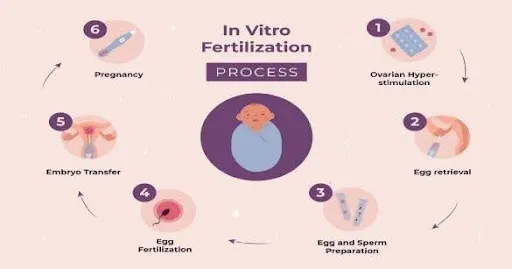
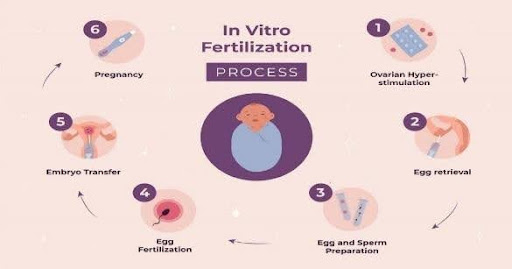
The process typically involves several steps, such as ovarian stimulation, egg retrieval, sperm preparation, fertilization, embryo development, embryo transfer, and implantation.
The success of IVF (in vitro fertilization) depends on several factors, including the woman’s age, the underlying cause of infertility, and the quality of both eggs and sperm. Although IVF is generally considered safe, it does carry some potential risks, such as multiple pregnancies, miscarriage, and ovarian hyperstimulation syndrome (OHSS). For this reason, IVF is not always the first line of treatment. In many cases, other fertility options—such as intrauterine insemination (IUI)—may be explored before considering IVF.
Intrauterine insemination (IUI)
IUI is also called artificial insemination, which is a process where a sperm sample is placed directly into the uterus using a small catheter to improve the chances of fertilisation by raising the number of healthy sperm that reach the fallopian tubes when the woman is most fertile.
It may be timed with a woman’s natural ovulation cycle or used in conjunction with certain fertility drugs. It is commonly used by same-gender female couples and single women using donor sperm, as well as by couples facing infertility related to medical conditions such as endometriosis or low sperm count or quality or unexplained infertility.
One of the key advantages of IUI is that it is a minimally invasive procedure and a more affordable alternative to IVF, making it a widely chosen option for those beginning their fertility journey.
The following are the latest and most advanced technologies used to enhance the success rate of the IVF process.
Cryopreservation
Cryopreservation, also called fertility preservation, preserves fertility in cases when a person’s reproductive health is compromised. It is the process of freezing the biological materials, such as eggs, sperm and embryos, using very low temperatures, usually below -80°C, to slow down the biological activity for future use.
Cryopreservation makes future ART cycles simpler, less expensive, and less invasive than the initial IVF cycle since the woman does not require ovarian stimulation or egg retrieval. Once frozen, embryos may be stored for prolonged periods, and live births have been reported using embryos that have been frozen for almost 20 years.
It is a very good and cost-effective technique which can be helpful for couples who want to delay marriage, pregnancy and chemotherapy patients. Egg freezing, or oocyte cryopreservation, can be helpful for women who are undergoing chemotherapy and/or pelvic radiation therapy. This approach gives women more control over their reproductive timing and decision-making.
Intracytoplasmic sperm injection (ICSI):
Intracytoplasmic sperm injection (ICSI) is a specialised form of in vitro fertilization (IVF), where an individual, high-quality, single sperm is directly injected into a mature egg for fertilization.
It is performed when a man has an extremely low count of sperm or is unable to ejaculate. Healthcare professionals retrieve the sperm from the inside of a man using one of three techniques, such as percutaneous epididymal sperm aspiration (PESA), testicular sperm aspiration (TESA) and testicular sperm extraction (TESE).
Blastocyst transfer
Blastocyst transfer is one of the specialized types of IVF techniques where an embryo is typically cultured after fertilization in a lab for 5-6 days to reach the blastocyst stage and is then transferred to the uterus for successful implantation. After being transferred to the uterus, the blastocyst can begin to implant in the uterine lining. This technique aims to raise the chances of pregnancy by selecting embryos with the best potential (greater chance) for successful implantation and pregnancy.
This approach can be helpful for the couples who have had failed attempts with IVF or IVF-ICSI. Physicians consider individuals with a high number of good-quality eggs to be ideal candidates for blastocyst culture as an alternative treatment option. Selection of high-quality embryos, reduced multiple pregnancy risk, and potential for higher success rates are the advantages of blastocyst transfer.
However, not all the embryos can reach the blastocyst stage due to genetic defects, poor quality of the egg or sperm, or may not be able to thrive in the IVF lab environment.
Laser Assisted Hatching Laser-assisted hatching is an advanced process of assisted reproductive technology used in IVF that involves an embryologist using a laser (micromanipulator) to thin or create a hole in the zona pellucida (embryo’s outer shell) in order to support embryo hatching to shed its cell coat and attach to the uterus (implant). It is helpful for patients who have harder or thicker zona pellucida in their embryos, which can hinder the natural hatching process of the embryo, and for couples who have previously not succeeded with IVF.
Hatching is an important step in implantation, as it allows the embryo to attach to the uterine lining and initiate pregnancy. Actually, early-stage embryos are covered by a very thin membrane called the zona pellucida, where it breaks free from its outer shell, to initial implantation in the uterine lining. Before implantation, the embryo must hatch out of this thin layer. However, in some patients the embryo cannot hatch due to some physical factors (expansion of the blastocyst cavity) and molecular factors (including cell signalling and enzymes).
For patients with poor prognosis whose embryos may lack the energy to break through the membrane on their own, assisted hatching may improve their chances of implantation success.
Preimplantation genetic testing (PGT)
Preimplantation genetic screening (PGS) and diagnosis (PGD) are both types of preimplantation genetic testing (PGT) used during IVF techniques to assess the genetic health of embryos before transferring them to the uterus.
PGS and PGD can help to reduce the risk of miscarriage and raise the chances of successful pregnancy and are also used to screen for genetic disorders, allowing patients who are carriers of certain conditions to have healthy children.
These tests are the genetic studies of the embryos that are produced during the IVF cycle and can ensure that only healthy embryos are transferred. PGS screens the embryos for missing or extra chromosomes (aneuploidy). PGD is helpful in identifying the genetic diseases caused by single-gene disorders or the presence of chromosomal translocations.
As per experts, it is an established technology with high success rates, which is very useful for genetic testing, especially for women who are older than 38, have a history of Down syndrome, and have multiple IVF failures.
Non-invasive prenatal test (NIPT)
A NIPT is an accurate screening blood test that can aid in identifying abnormalities in chromosomes that develop babies. It is performed in the first trimester of pregnancy to assure the baby is healthy and developing normally without any genetic issues. It is a safe, non-invasive process that can effectively screen the conditions such as Down syndrome, Turner syndrome, Patau syndrome and Edward syndrome.
PRP treatment or ovarian PRP treatment
Ovarian PRP is a regenerative therapy where an individual’s own platelet-rich plasma is injected into the ovaries to rejuvenate the quality and quantity of eggs.
When the quantity and quality of eggs are lower than expected for your age, it is called premature ovarian insufficiency, diminished ovarian reserve, or early menopause. In this condition, before opting for IVF, IUI, egg donor, or any other fertility treatment options, doctors recommend considering ovarian PRP as an option.
PRP is also used for other infertility conditions such as poor ovarian reserve, ovarian rejuvenation, thin endometrial lining, boosting sperm production, and vaginal tightening after having multiple births in cosmetic gynaecology for sexual satisfaction.
PRP treatment is the latest IVF technology and is still in the experimental stage, where more detailed research is ongoing to fully understand its effectiveness and long-term effects. Hence, it is really crucial to discuss the potential benefits, risks, and suitability of ovarian PRP with a qualified fertility specialist.
Stem Cell Treatment
Stem cell treatment is a cell therapy, which is a latest trend in IVF technology. In this approach, healthy stem cells are extracted from bone marrow or fat tissues and injected into the person’s body to replace the damaged cells. This treatment involves harvesting stem cells from embryos and repairing the damaged cells to enhance the IVF process. These cells are called ‘totipotent stem cells as they have the magical properties to develop into any type of cell in the body and have the potential to repair damaged tissue and regenerate new cells, making them a promising option for treating a wide range of conditions. This technique is really helpful for couples who are struggling to conceive.
As per the experts, this treatment is more effective than PRP treatment for ovarian reserve, as many live births are reported.
Embryoscope (Time Lapse Imaging)
This innovative IVF technology features a time-lapse incubator with a camera that provides an uninterrupted view of embryo development without exposing it to outside conditions.
Every 10 minutes, the Embryoscope captures images, creating a time-lapse video that allows healthcare professionals to monitor cell divisions and growth. The system includes coding to help prioritize and select the best embryos, which is believed to enhance IVF success rates.
Recent advances
The journey of IVF has evolved from basic procedures to advanced techniques, with 2025 bringing remarkable progress. Some doctors are already using new methods to improve accuracy and reduce risks, while other promising techniques are still in the research stage and represent the future of fertility treatment, including:
CRISPR-Cas9 gene editing: By targeting particular DNA sequences, this method enables the modification or correction of genes in embryos. This has the potential to treat inherited diseases by correcting faulty genes, however this approach also raised concerns about unforeseen repercussions because of the unexpected alterations in the genome, such as chromosome loss and DNA damage that results in genetic abnormalities. Therefore, more study is still required to guarantee its responsible and safe use. To guarantee ethical use, strict restrictions are being followed.
Artificial Intelligence (AI) in Embryo Selection: AI is revolutionising the selection of the best oocyte and sperm combination as well as predicting embryo quality, using algorithms to analyse morphological data of embryos and time-lapse imaging, potentially improving the accuracy and reliability of embryo quality assessment and prediction.
Personalized Ovarian Stimulation Protocols: Ovarian stimulation is a crucial step in IVF and other ART treatments. New hormone monitoring technologies are introduced with the combination of artificial intelligence to customise the drug dosages and timing for each woman’s unique ovarian reserve and response pattern, reducing the risks like ovarian hyperstimulation syndrome (OHSS) and maximizing the quality of the egg.
Improved Egg and Embryo Freezing Techniques:Vitrification is a rapid freezing technology that has revolutionised sperm, egg and embryo preservation by adding cryoprotective agents, including salts, sugars, glycerol, etc., minimising the damage to the DNA. New advancements in freezing techniques and temperature control now allow better survival rates and increased implantation success, offering the flexibility to get pregnant without compromising fertility.
Microfluids for Sperm Selection: Microfluidics is a novel cutting-edge technique that mimics the natural selection process in the female reproductive tract. This method is being used to select the healthiest sperm with better DNA integrity and decreases the risk of passing on damaged DNA.
Invocell or Vagincubator: Intervaginal culture device (IVC) is the latest IVF technology that uses the natural environment of the vagina for the initial embryo development. During this process, healthcare professionals place the IVC device in the vagina and fertilise the egg and sperm inside the body for about 5 days. After 5 days, the IVC will be removed from the vagina, and the embryo formed within the IVC is then implanted in the womb.
I-Womb Technique: I-Womb Technique, also called intelligent womb technology, is a technique used in IVF to improve the natural environment for embryo development and implantation by continuously tracking various parameters such as humidity, temperature and gas levels and regulating lab conditions to mimic the reproductive tract of the female, potentially leading to higher IVF success rates.
Conclusion
As discussed, fertility treatments have come a long way in 2025, offering multiple options with new technologies and improved success rates on people who have the desire to become parents. However, before opting any above-mentioned procedure, it is recommended to talk to your doctor to understand your condition for choosing the best treatment approach that is suitable for you.
Our healthcare specialists are equipped with the knowledge and skills to provide you with the support you require. From consultation to diagnosis to treatments, our experts are dedicated to helping you.