
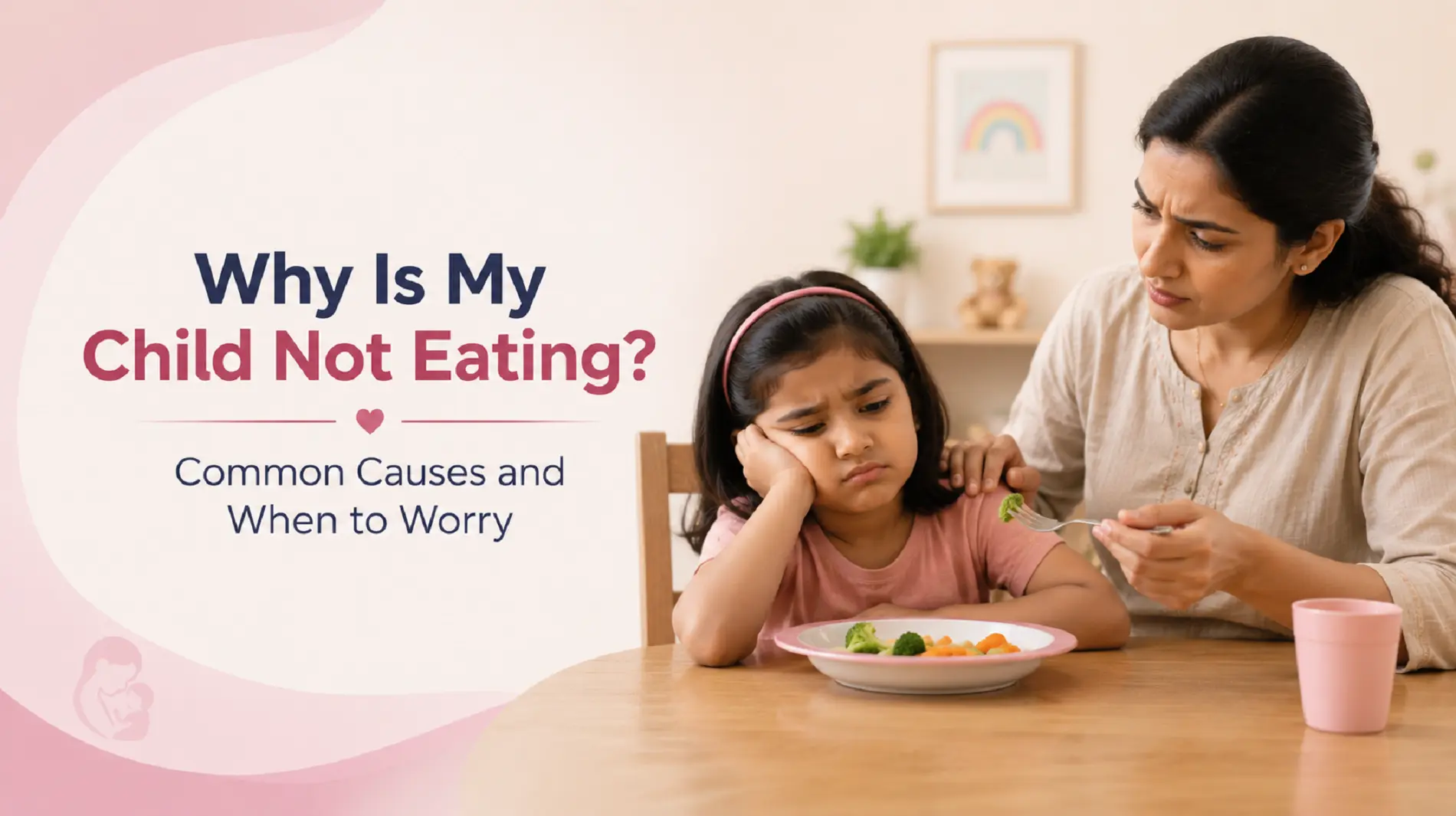
“Doctor, my child hardly eats anything.”
It is one of the most common concerns parents bring to a pediatrician.
One day, a child may happily finish a bowl of rice. The next day, they may push the plate away after two bites. Some children refuse vegetables, some want only one particular food, and some seem to survive on a few bites here and there.
Naturally, parents begin to worry.
Is my child getting enough nutrition? Is this just a phase? Or is there something wrong?
The good news is that occasional changes in appetite are common in children. But persistent poor eating, especially when accompanied by poor growth, tiredness, vomiting, constipation, or other symptoms, deserves a closer look.
The important thing is not to judge your child’s health by one meal—or even one day’s eating.
Instead, look at the overall eating pattern, growth, activity level and health of the child.
Why Do Children Stop Eating?
Children can lose interest in food for many different reasons.
Sometimes it is simply part of growing up. At other times, poor appetite may be a sign of an underlying problem.
Some common causes include:
- Normal changes in appetite during growth
- Picky eating
- Too many snacks or drinks between meals
- Constipation
- Teething
- Viral or other infections
- Stomach or digestive problems
- Mouth ulcers or dental problems
- Anemia or nutritional deficiencies
- Food allergies or intolerances
- Stress or changes in routine
- Difficulty with chewing, swallowing or feeding
Understanding why a child isn’t eating is more useful than simply trying to make them eat more.
Is My Child Really Eating Too Little?
This is often the first thing that needs to be clarified.
Parents naturally compare their child’s plate with what they think they should be eating. But children’s appetites can vary considerably from one day to another.
A child may eat very little at one meal and compensate by eating more at another.
That’s why pediatricians don’t assess nutrition based on a single meal.
We look at the bigger picture:
Is the child growing appropriately?
Is the child active and alert?
Is the child eating a reasonable variety of foods over time?
Are there any other symptoms?
If growth and development are progressing normally and the child is otherwise healthy and active, occasional picky eating is often less concerning.
Picky Eating: Is It Normal?
Yes, to an extent.
Many children become selective about food, particularly during the toddler and preschool years.
They may suddenly refuse foods they previously enjoyed or insist on eating the same food repeatedly.
This can be frustrating for parents, but forcing a child to finish every bite usually doesn’t solve the problem.
Instead, mealtimes should remain calm and predictable.
Offer healthy food choices and allow the child to decide how much they want to eat.
A child may need to see a new food several times before accepting it. What matters is continuing to offer variety without turning every meal into a battle.
Could Too Many Snacks Be the Reason?
Sometimes the problem isn’t actually a lack of appetite.
A child who drinks milk frequently, has biscuits or packaged snacks throughout the day, or drinks juices and other sweetened beverages may simply not feel hungry at mealtimes.
This is especially common when children graze throughout the day.
Regular meals and planned snacks can help children arrive at mealtimes hungry enough to eat.
Constipation Can Also Affect Appetite
Constipation is an often-overlooked reason for poor appetite in children.
A child with constipation may complain of:
- Abdominal discomfort
- Bloating
- Pain while passing stools
- Hard stools
- Infrequent bowel movements
- Reduced appetite
Some children don’t clearly complain about stomach pain. Instead, parents may simply notice that they are eating less.
If constipation is present, addressing it may improve the child’s appetite as well.
Illness Can Temporarily Reduce Appetite
It is very common for children to eat less when they are unwell.
Fever, cough, sore throat, vomiting, diarrhea and other infections can temporarily reduce appetite.
During an illness, keep your child hydrated and try to give easily digestible food.
Fluids and hydration are often the immediate priority.
As the child recovers, appetite usually starts returning gradually.
However, if poor appetite continues even after the child has recovered, it is worth discussing with a pediatrician.
Could There Be a Nutritional Deficiency?
Persistent poor eating can sometimes contribute to nutritional deficiencies.
Iron deficiency, for example, can be associated with tiredness, weakness and reduced appetite.
A child who eats a very restricted diet may also miss important nutrients required for healthy growth and development.
However, supplements should not be started simply because a child is a picky eater.
If a deficiency is suspected, a pediatrician can assess the child’s diet, growth and symptoms and recommend investigations or supplementation when appropriate.
When Is Not Eating a Sign of Something More?
Poor appetite becomes more concerning when it is persistent or accompanied by other symptoms.
Parents should pay attention if their child:
- Is losing weight
- Is not gaining weight as expected
- Is falling off their previous growth pattern
- Is unusually tired or weak
- Has persistent vomiting or diarrhea
- Has ongoing abdominal pain
- Has difficulty swallowing or chewing
- Frequently coughs or chokes while eating
- Has severe constipation
- Has recurrent infections
- Has become increasingly restrictive with food
These signs don’t necessarily mean there is a serious illness.
But they are reasons to have the child evaluated rather than assuming it is simply picky eating.
What Can Parents Do at Home?
A few simple changes can make mealtimes easier.
Keep meals predictable
Try to maintain regular meal and snack times rather than allowing children to snack continuously throughout the day.
Offer variety
Include different food groups and textures appropriate for your child’s age.
Avoid forcing food
Pressure, threats and bargaining around food can make mealtimes stressful and may increase food refusal.
Eat together when possible
Children often learn by watching their parents and siblings. Family meals can make eating a more natural part of the day.
Limit distractions
Try to keep screens and toys away during meals so children can focus on eating.
Be patient with new foods
A child refusing a food once does not necessarily mean they dislike it forever. Continue offering it without forcing them to eat it.
Should I Worry If My Child Skips a Meal?
Usually, no.
Children occasionally skip meals, especially when they are tired, distracted, or simply not hungry.
A single missed meal is rarely a reason for concern.
What matters more is the pattern over time.
If your child is active, growing normally and eating a reasonable variety of foods across the week, there is usually less reason to worry.
But if poor eating persists or is accompanied by weight loss, poor growth or other symptoms, a pediatric evaluation is appropriate.
When Should You See a Pediatrician?
Consider consulting a pediatrician if your child:
- consistently eats very little
- weight is decreasing
- Is not gaining weight appropriately
- seems unusually tired or weak
- Eating causes pain
- frequently vomits
- has difficulty swallowing
- Coughs or chokes during meals
- Has persistent constipation or diarrhea
- diet has become extremely limited
- You are concerned about growth or development
A pediatrician can assess growth, nutrition, feeding behaviour and possible medical causes instead of simply advising you to “make the child eat.”
Remember: Eating Less Is Not Always the Problem
Sometimes the focus becomes so much about how much a child eats that parents miss the more important questions.
Is the child growing?
Is the child active?
Is the child achieving developmental milestones?
Is the child getting a reasonable variety of nutrients?
Are there symptoms that suggest an underlying problem?
A child doesn’t need to eat the same quantity every day.
The goal is not to make children eat more at every meal. It is to help them develop a healthy relationship with food while making sure their nutritional and developmental needs are being met.
Expert Pediatric Care at Ankura Hospital
At Ankura Hospital for Women & Children, our pediatricians look beyond the plate when a child has poor appetite.
We assess the child’s growth pattern, dietary habits, feeding behaviour and overall health to understand whether the problem is a normal phase, picky eating, or something that needs further evaluation.
If your child’s poor appetite is persistent or accompanied by changes in growth, energy levels or other symptoms, an early pediatric assessment can help identify the cause and provide the right guidance.