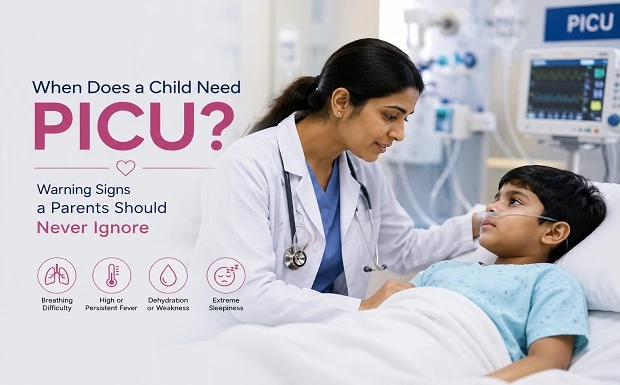
When Does a Child Need PICU? Warning Signs Parents Should Never Ignore
Seeing your child seriously unwell is one of the most stressful experiences for any parent. Hearing doctors mention “PICU” can immediately create fear and confusion, with many families assuming the condition must be life-threatening.
But that is not always true.
At Ankura Hospital Hyderabad, pediatric specialists often explain that the Pediatric Intensive Care Unit (PICU) is designed to provide advanced monitoring and specialized treatment for children who need closer medical attention during emergencies or severe illnesses.
In many situations, early PICU admission actually helps prevent complications before they become critical.
Understanding what PICU means, why children may need intensive care, and which warning signs parents should never ignore can help families seek timely treatment and feel more prepared during emergencies.
What Is PICU?
A Pediatric Intensive Care Unit (PICU) is a specialized hospital unit dedicated to caring for infants, children, and adolescents with critical illnesses or those at risk of deterioration, enabling timely intervention and advanced supportive care.
Unlike regular pediatric wards, PICUs are equipped with:
- Continuous monitoring systems
- Pediatric ventilators
- Emergency life-support equipment
- Specialized pediatric emergency teams
- Advanced respiratory, renal, and cardiac support
Children admitted to PICU require close observation because their condition may change quickly and need immediate intervention.
Why Is Pediatric ICU Different from Adult ICU?
Children are not simply smaller versions of adults.
Children are not simply smaller versions of adults - their physiology, diseases, medication requirements, and emotional needs differ significantly from those of adults. A PICU is specifically designed and staffed to provide age-appropriate critical care, specialized monitoring, advanced life support, and family-centered management.
This specialized care plays a major role in improving recovery outcomes.
Common Reasons Children Need PICU Care
Many illnesses that require PICU care may start with mild symptoms but can become serious quickly. Some common reasons for PICU admission include:
Severe Breathing Problems
Children with pneumonia, severe asthma, bronchiolitis, or other lung infections may develop difficulty breathing and need oxygen support or close monitoring.
Severe Infections (Sepsis)
Certain viral or bacterial infections can spread rapidly and affect the lungs, heart, blood pressure, or other organs, requiring intensive care.
Dengue Complications
Some children with dengue can develop complications, which can be life-threatening if not treated promptly. Complications may include severe dehydration, bleeding, a sudden drop in blood pressure, leakage of fluid from blood vessels, breathing difficulty due to fluid accumulation, liver and kidney involvement, and failure of vital organs. These children require close monitoring in the PICU so that fluids, blood products, and other treatments can be given quickly if their condition worsens.
Seizures
Children experiencing prolonged or repeated seizures often require emergency stabilization and neurological monitoring.
Severe Dehydration
Persistent vomiting, diarrhea, or infections can quickly lead to dangerous fluid and electrolyte imbalance in young children.
Accidents and Head Injuries
Children with serious injuries, head trauma, or fractures associated with major accidents may need continuous monitoring and specialized care.
After Major Surgery
Some children need PICU care after complex surgeries to ensure a safe recovery and manage pain, breathing, and vital functions.
Heart or Other Critical Conditions
Children with serious heart problems, poisoning, allergic reactions, or sudden worsening of chronic illnesses may also require PICU care for close observation and timely treatment.
Warning Signs Parents Should Never Ignore
Many parents are unsure when a child’s illness becomes serious enough for emergency care.
Certain symptoms should never be ignored, especially in infants and young children.
Fast or Difficult Breathing
Seek immediate medical attention if your child:
- breathes rapidly
- struggles to breathe
- has chest retractions
- develops bluish lips
- makes grunting sounds
Extreme Sleepiness
If a child becomes unusually weak, difficult to wake, or less responsive, urgent evaluation is necessary.
Persistent Vomiting or Severe Diarrhea
Repeated vomiting or diarrhea can quickly lead to dehydration and dangerous fluid and electrolyte loss.
Seizures
Any seizure episode should be medically evaluated immediately.
High Fever with Poor Activity
A high fever accompanied by poor feeding, extreme irritability, excessive sleepiness, rash, or reduced activity may be a sign of a serious infection.
Reduced Urine Output
Very little urine, dry mouth, no tears while crying, sunken eyes, or excessive thirst should not be ignored.
At Ankura Hospital’s Pediatric Emergency & PICU Services, pediatric emergency and ICU specialists are trained to identify these warning signs early and provide immediate intervention.
Why Early PICU Care Matters
One of the biggest misconceptions about intensive care is that it is only for extremely critical patients.
In reality, many children are admitted for close monitoring so that doctors can detect any worsening of their condition early and provide timely treatment.
Supporting Families During PICU Admission
PICU admission is emotionally overwhelming for parents.
Families often feel anxious, frightened, and confused by medical terms and emergency procedures.
This is why pediatric critical care teams focus not only on treating the child but also on supporting parents emotionally throughout the process.
At Ankura Hospital, doctors regularly communicate with families, explain treatment plans clearly, and guide parents through every stage of care.
Can Children Recover Fully After PICU Care?
Yes. Many children recover completely after receiving timely intensive care.
With early diagnosis, advanced treatment, and specialized pediatric care, recovery outcomes are often very positive.
Why Choose Ankura Hospital for Pediatric Critical Care?
At Ankura Hospital Hyderabad, our pediatric emergency and critical care teams are experienced in managing a wide range of medical emergencies and critical illnesses such as
- Severe infections
- Respiratory emergencies
- Seizures
- Dengue complications
- Trauma
- Poisoning
Our PICU services include:
- Management of critically ill children with severe infections, sepsis, shock, respiratory failure, and multi-organ dysfunction.
- Advanced respiratory support, including non-invasive ventilation, mechanical ventilation, high-frequency ventilation, and inhaled nitric oxide therapy where indicated.
- Hemodynamic monitoring and support with vasoactive medications for children with circulatory failure.
- Comprehensive care for neurological emergencies such as status epilepticus, traumatic brain injury, encephalitis, stroke, and raised intracranial pressure.
- Specialized management of severe dengue, poisoning, metabolic crises, endocrine emergencies, and other complex pediatric conditions.
- Post-operative intensive care following complex abdominal, thoracic, orthopedic, brain, genitourinary related procedures.
- Continuous renal replacement therapy (CRRT) and other advanced organ support therapies for acute kidney injury and multi-organ failure.
- Therapeutic Plasma Exchange (PLEX) for children with selected neurological, autoimmune, hematological, and inflammatory disorders
- Extracorporeal life support (ECMO), where available, for selected patients with severe cardiac or respiratory failure.
- Care of children with congenital disorders, genetic diseases, immunological conditions, and chronic illnesses requiring intensive monitoring.
- Rapid response and stabilization of critically ill children transferred from other hospitals or emergency departments.
- Multidisciplinary care involving pediatric intensivists, surgeons, cardiologists, neurologists, nephrologists, infectious disease specialists, respiratory therapists, rehabilitation experts, and specialized nursing teams.
- Family-centered care with continuous communication, counselling, nutritional support, pain management, and rehabilitation planning to optimize recovery and long-term outcomes.
With experienced doctors, modern infrastructure, and compassionate family-centered care, Ankura supports children and parents through every emergency situation.