
Undescended Testes: Why Early Treatment Matters
One of the most common medical conditions affecting newborn boys is undescended testes. Even while the condition could seem worrisome, early identification and treatment can help alleviate the parental apprehension, prevent complications and help preserve testicular viability and function.
What are Undescended Testes?
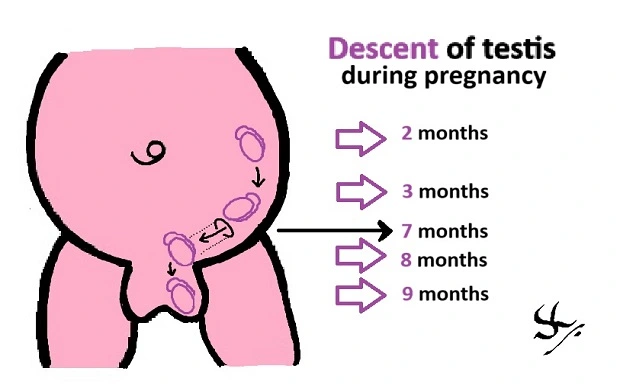
During early foetal development, the testicles develop in the abdomen. They slowly descend as gestational age increases and just before birth, the testicles typically drop from inside the abdomen into the scrotum. Undescended testes are when the testicles fail to drop down into the scrotum before birth or in the first few months of life. Another name for undescended testicles is cryptorchidism.
Undescended testes can affect one testicle (unilateral) or both testicles (bilateral). The condition is more common in premature babies and those born with low birth weight.
Signs of Undescended Testes
Parents may notice:
- An empty or underdeveloped scrotum on one side
- One or both testicles not visible or felt in the scrotum
- Differences in the size or appearance of the scrotum
In most cases, the condition does not cause pain or discomfort, which is why routine newborn and pediatric examinations are important.
How common is the condition?
Undescended testes occur in approximately 3–5% of full-term baby boys and are even more common in premature infants. In some cases, the testicle may descend naturally within the first few months of life. However, if it remains undescended beyond six months of age, medical evaluation is recommended.
Are testes that have not descended serious?
Undescended testes can be serious if left untreated. They may affect the health of your child's sperm and reduce their testosterone levels. The testis may twist and the blood supply to the testis can get hampered. There may be an associated hernia with an undescended testis or there could be an increased risk of trauma or infection to the testis.
Lastly, your child may also have a marginally elevated chance of testicular cancer.
Why does early treatment matter?
Supports normal fertility development
Early treatment helps protect future fertility potential and supports normal testicular function. An undescended testicle may not develop normally if left untreated. The longer it remains outside the scrotum, the greater the chance of changes that could affect its function. Timely correction helps promote healthy growth and development.
Lowers the risk of testicular cancer
Boys born with undescended testes have a higher risk of developing testicular cancer later in life compared to those whose testicles descended normally. Although surgery does not completely eliminate this risk, early treatment can significantly reduce it and makes future monitoring easier.
Prevents testicular torsion and injury
An undescended testicle may be more prone to twisting, a condition called testicular torsion. This can cut off the blood supply and requires emergency medical attention. Correcting the position of the testicle helps reduce this risk.
Improves physical appearance and confidence
As children grow older, differences in the appearance of the scrotum may lead to concerns about body image and self-confidence. Early treatment helps achieve a more normal appearance and may prevent emotional or psychological concerns later in life.
Treatment for undescended testes
The most common treatment is a surgical procedure called orchiopexy.
During this procedure:
- The pediatric surgeon locates the undescended testicle.
- The testicle is gently moved into the scrotum.
- It is secured in the correct position to prevent it from moving back.
Orchiopexy is a routine pediatric surgical procedure with a high success rate. Most children recover quickly and can return to normal activities within a short period.
Open surgery is done when the testis can be felt by your pediatric surgeon on examination. On the other hand, laparoscopy is needed when the testis cannot be felt by the doctor, i.e., its possibly located high up in the abdomen.
What are the possible findings on laparoscopy for an undescended testis that is not felt on examination?
1. Often times, following laparoscopy, the testis can be brought down into the scrotum by a single stage orchiopexy.
2. Sometimes the testicle might be high up in the abdomen, warranting a two stage orchiopexy where the two stages are performed usually 6 months apart.
3. Rarely, the testis might be reduced to a structure called “nubbin” with no viable cells to produce sperms. This would then require removal – a procedure called orchiectomy.
When should treatment be done?
Current medical guidelines recommend evaluation if the testicle has not descended by six months of age. If the condition persists, treatment is usually advised between 6 and 12 months, with many specialists recommending surgery before the child turns one year old whenever possible.
Early intervention offers the best outcomes for testicular development and long-term health.
When should parents consult a pediatric surgeon?
Parents should consult a pediatric surgeon if:
- One or both testicles are not present in the scrotum.
- The scrotum appears uneven or underdeveloped.
- The testicle has not descended by six months of age.
- There are concerns about swelling, pain, or changes in the groin area.
Early evaluation allows doctors to determine the best treatment plan and avoid unnecessary delays.
Conclusion
Undescended testes is a common condition that can usually be treated successfully when identified early. Although some testicles descend naturally during the first few months of life, those that remain undescended beyond six months often require medical attention.
Early treatment helps support normal fertility, reduces the risk of future complications, and promotes healthy development. If you notice that your child's testicle is not present in the scrotum, consult a pediatric surgeon for timely evaluation and appropriate care.
Why Choose Ankura Hospital for Pediatric Surgical Care?
At Ankura Hospital, our experienced pediatric surgeons provide specialized care for conditions such as undescended testes using advanced surgical techniques and a child-friendly approach. From diagnosis to treatment and follow-up care, our expert team is committed to ensuring the best possible outcomes for your child's health, comfort, and long-term well-being.