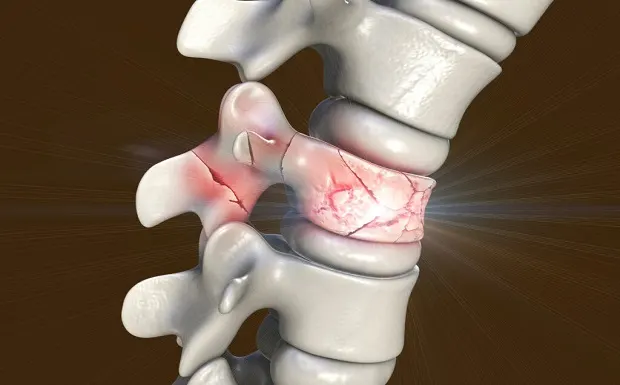
Spondylolysis is often diagnosed in children with lower back pain. A defect or stress fracture in the pars interarticularis of the vertebral arch is called spondylolysis, sometimes referred to as a pars defect or pars fracture.
What is spondylolysis?
Spondylolysis refers to a fracture (break) in one of the vertebrae, the small bones of the spine. It is commonly seen at the fourth or fifth lumbar vertebra in the low back.
Low back pain in children, adolescents, and young adults can often be caused by spondylolysis. Generally, it heals with rest and physical therapy. Surgery is usually not needed.
What are the symptoms of spondylolysis?
The most typical sign of spondylosis is lower back pain. The pain usually:
Spreads (radiates) from the lower back into the thigh and butt muscles (buttocks).
The lower back and its surrounding muscles feel strained.
It tends to worsen during physical activity, and improves with rest or when less active.
Some children with spondylolysis never experience symptoms.
What causes spondylolysis?
Damage to part of the vertebrae called the pars interarticularis causes spondylolysis.
The pars interarticularis are thin pieces of bone that link the vertebrae directly above and below each other to form a working unit. These links let the spine move and flex. Anything that damages the pars interarticularis can crack them. Providers call these cracks pars fractures.
The most common causes of pars fractures are:
Overuse: Repetitive motions that put stress on the low back cause wear and tear on the vertebrae. Over time, this damage can add up to cause a pars fracture. Playing contact sports and repeatedly injuring the low back can all damage the vertebrae.
Growth spurts: Some kids and teens develop spondylolysis when they’re going through a growth spurt, a period when their bodies are physically growing and changing quickly.
Genetics: Some people are born with thinner vertebrae. This can make them more likely to experience a pars fracture.
What problems can happen?
Spondylolysis can occasionally result in lack of flexibility and chronic (long-lasting) back pain. Surgery may be required to address the issue if this occurs.
A painful condition known as spondylolisthesis can occasionally occur in children with spondylolysis. This happens when the front part of a vertebra slides away from the back part.
How is spondylolysis diagnosed?
Health care providers will do an exam. To hyperextend the spine, they may instruct the patient to bend backward or apply pressure on their back. A fracture in the pars, a particular area of the spine bone, may be the cause of back discomfort if these factors are present.
Lower back discomfort can also be caused by other conditions like herniated (bulging) discs, pinched nerves, or muscle soreness.
Health care professionals might perform tests like these to rule those out or confirm a diagnosis of spondylolysis: a back X-ray to look for fractures, a bone scan or a CT scan, which can detect smaller fractures or a lumbar MRI scan.
How is spondylolysis treated?
When spondylolysis is diagnosed early and treated appropriately, the majority of its discomfort goes away. The doctor may suggest the following if your child has spondylolysis:
a break from sports and other strenuous activities
plenty of rest
core-strengthening exercises that don't strain the lower back
flexibility training
physical therapy
over-the-counter (OTC) medicine to help ease pain and swelling
wearing a back brace or support
If they follow the advice of their healthcare provider, the majority of children and teenagers will feel better in three months. Before engaging in intense workouts or contact sports, they should wait until they are pain-free and have their full range of motion.
Can spondylolysis be prevented?
Since spondylolysis can happen suddenly or gradually, it is difficult to prevent. However, young athletes can reduce the risk by:
limiting time spent on high-risk sports
resting and recovering after physical activities
keeping core muscles strong
warming up properly before playing any sports
stretching regularly
using safety equipment correctly
following the rules and techniques for their sport or activity
maintaining a healthy weight
Why should children with spondylolysis seek care at Ankura Hospital?
Spondylolysis and other spine-related disorders are treated comprehensively and with a child-centered approach at Ankura Hospital. Our team of experts provides early diagnosis, individualised treatment regimens, and, if possible, non-surgical care. With access to cutting-edge imaging, physical therapy, and rehabilitation assistance, Ankura Hospital prioritises pain management, a safe recovery, and assisting children in confidently resuming their regular activities.