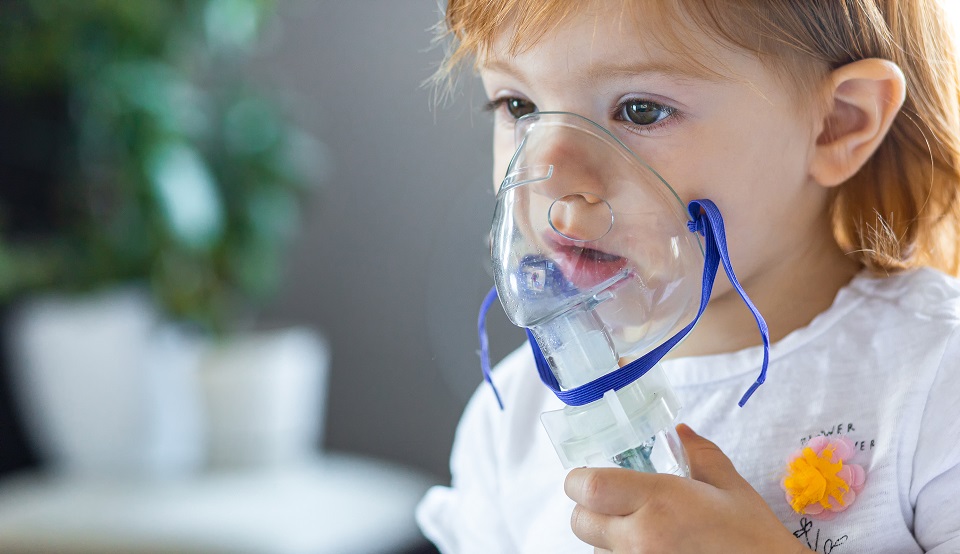
Nebulisers are often essential devices for treating children's respiratory problems. These devices convert liquid medication into a fine mist that can be easily inhaled, ensuring the medicine reaches deep into the lungs.
Understanding Nebulizers
A nebuliser is a small device used for children with respiratory issues. A nebuliser helps in the efficient delivery of medication to the lungs. Nebuliser medication is administered as a liquid. The drug is transformed by the nebuliser into an aerosol, tiny particles of medication in the air that the patient can inhale into their lungs.
Types of Nebulizers
Nebulisers come in a variety of forms, each with unique benefits:
• Jet Nebulisers: The most popular kind, they turn medication into a mist by using compressed air.
• Ultrasonic Nebulisers: These are often quieter than jet nebulisers and produce the mist using ultrasonic frequencies.
• Mesh Nebulisers: These are often more portable and effective, using a vibrating mesh to produce the mist.
Why nebulizers are essential for children?
Young children in particular may find it difficult to use their inhalers. Nebulisers make the process easier by letting children breathe normally while administering the drug directly to their lungs. This is particularly important during an asthma attack or other respiratory emergency, when prompt and efficient medicine delivery is essential.
Conditions Treated Using Nebulizers
A doctor may advise using a nebulizer for an infant if the baby has narrowed or inflamed airways, breathing difficulty, or other respiratory concerns caused by:
- Rapid breathing conditions such as asthma or cystic fibrosis
- Lung infections, including viral pneumonia
- Severe allergic reactions
Babies with these conditions may show symptoms like:
- Wheezing
- Persistent coughing
- Shortness of breath
- Fast or laboured breathing
- Chest discomfort
- Trouble breathing
- Delayed recovery after bronchitis
Know your child’s respiratory problem
The majority of people think that nebulisation may treat any respiratory condition, including wheezing, coughing, dyspnoea, and difficulty breathing. Not all colds and coughs require nebulisation. Before using a nebuliser, you need to identify what is causing your child's illness or cough. Nebuliser should only be used as directed by a physician, and it should not be repeated unless advised.
For short term wheezing or asthma symptoms, nebulisation may be beneficial. Using inhalers is more appropriate for children who have asthma or wheezing episodes on a regular basis. For long-term usage, inhalers are superior to nebulisers in several ways.
How to help your child use a Nebulizer?
Sometimes babies and small children have trouble getting asthma treatments with a nebulizer. Children need to sit still for 5 to 15 minutes while they breathe in the medicine.
The following tips can help make treatment time go smoothly:
- Use the nebulizer at the same time each day, so that your child knows to expect it.
- Try to make it fun, read stories, sing songs, or pullout special toys just during the nebulizer time.
- Let your child decorate the nebulizer machine with stickers.
- Try to put your child in a highchair. Your child may choose to sit on your lap if that doesn't work.
- If your baby is fussy, consider using the nebuliser when they are asleep.
- If your child is frightened by the mask, explain that it's a "pilot mask" or a "space mask." Before turning on the nebuliser, you could even play a video about pilots or astronauts and utilise some of their terminology, such as "start your engines". You also can buy masks shaped like dragons and other animals.
- If your child is old enough, ask them to assist you put the mask on, hold the tubing, and turn the machine on.
- Additionally, you might reward your child for cooperation with a tiny "prize" (such as stickers or a simple toy).
Why should parents choose Ankura Hospital for nebulisation and pediatric respiratory problems?
Ankura Hospital offers specialised pediatric respiratory care with experienced pediatricians, child-friendly treatment approaches, and advanced nebulisation support. Our expert team carefully evaluates your child’s condition before recommending nebulisation, ensuring safe, effective, and age-appropriate treatment. With a compassionate approach and well-equipped facilities, Ankura Hospital focuses on helping children breathe easier and recover faster.