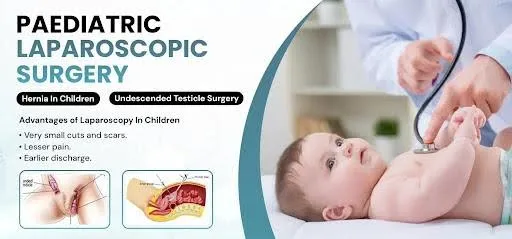
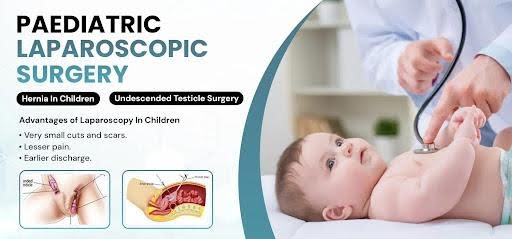
Laparoscopic Surgery (Key-Hole) in Children Laparoscopic surgery, often referred to as key-hole surgery and minimally invasive surgery (MIS) has revolutionized the way surgical care is delivered to children. Unlike traditional open surgery, which requires large incisions, laparoscopic procedures involve small cuts through which specialized thin, and long instruments and a camera are inserted. This allows surgeons to perform complex procedures with precision while minimizing trauma to a child’s body.
Laparoscopy is performed with the aid of an instrument called a Laparoscope. A laparoscope is a thin tool that has a video camera and light at the end of it. This instrument is inserted inside the body through the small cut made by the surgeon, which helps them visualise the internal organs clearly, in a magnified-view on a monitor.
Benefits of Laparoscopic Surgery
The word “surgery”, particularly in children, can bring a lot of apprehension to parents. However, with the advantages that minimally invasive laparoscopic surgeries offer, the experience has become far less daunting. Some advantages include:
Smaller Incisions: Tiny cuts (3mm or 5mm or 1cm) are used in laparoscopy to perform surgical procedures equally effectively as conventional surgeries. Smaller cuts reduce pain, scarring, and the risk of wound infection.
Faster Recovery: Children can often return home sooner and resume normal activities faster than after open surgery.
Better Visualization: The camera used in laparoscopic surgery provides surgeons with a magnified view of internal organs, allowing for more accurate and delicate surgical interventions.
Which conditions can be treated laparoscopically in children? Today, almost all major and minor abdominal conditions in children can be treated safely using laparoscopic (keyhole) surgery. Ankura Hospital for Women and Children is proud to be a leader in pediatric laparoscopic surgery and urology, offering one of the highest success rates in the country. Some common conditions that can be treated laparoscopically include:
Appendicitis: Removal of an inflamed appendix.
Hernias: Repairing inguinal or umbilical hernias.
Gallbladder Problems: Removal of the gallbladder, choledochal cysts.
Congenital Conditions: Such as pyloric stenosis, obstruction of the ureteropelvic junction, vesicoureteral reflux, etc.
What Parents Should Know?
Preoperative Preparation: Before laparoscopic surgery, children undergo careful preparation to ensure safety and smooth recovery. Fasting is usually required for a few hours before surgery, to reduce the risk of complications during anesthesia. A couple of routine investigations or blood tests may be advised to check overall health and fitness for surgery. The surgeon and anaesthetist will explain the procedure in detail, discuss possible risks and benefits, and answer any questions. Parents are encouraged to share the child’s medical history, allergies, or ongoing medications. In case the child has any other health conditions, then additional precautions would be suggested. Hospital Stay: One of the biggest advantages of laparoscopic surgery is a shorter hospital stay compared to conventional open surgery. In many cases, discharge is possible within 24 to 48 hours after the procedure. For minor laparoscopic surgeries, such as hernia repair or appendectomy in uncomplicated cases, children may even be treated on a day-care basis, meaning they can go home the same day once they are fully awake, comfortable, and stable. This quicker recovery not only reduces the child’s stress but also allows families to return to normal routines sooner, making laparoscopic surgery highly parent- and child-friendly. Postoperative Care: Pain is usually manageable with mild medications, and children are encouraged to move gently soon after surgery.
Safety and Expertise
Laparoscopic surgeries in children are performed by expert pediatric surgeons and pediatric urologists. They are skilled in handling the smaller anatomy of children delicately and ensuring minimal trauma. Advanced surgical technology, anesthetic expertise, and child-friendly facilities ensure safe and comfortable procedures.
Why choose Ankura?
Ankura Hospital for Women and Children is a leader in Pediatric Surgery and Urology, with one of the highest success rates across the country. Our team of highly skilled pediatric super-specialists has successfully managed some of the most challenging and complex cases laparoscopically with excellent outcomes. Every child is treated with personalized care, clinical excellence, and compassion. The hospital is equipped with the latest technology in minimally invasive and advanced laparoscopic systems, ensuring precision, safety, and faster recovery for children. From infants to adolescents, our experts have performed a wide range of procedures, including neonatal surgeries, complex gastrointestinal and thoracic surgeries, and advanced pediatric urology surgeries. At Ankura, we follow a multidisciplinary approach, bringing together pediatric surgeons, urologists, anesthetists, intensivists, physiotherapists, child psychologists, and nutrition specialists to provide holistic care under one roof. We also ensure parents are supported and involved at every step of the care journey, following a family-centered model.
Our healthcare specialists are equipped with the knowledge and skills to provide you with the support you require. From consultation to diagnosis to treatments, our experts are dedicated to helping you.