
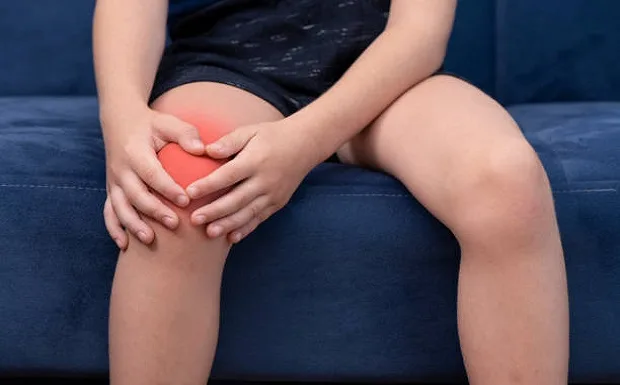
The knee is a joint that attaches the thighbone (femur) to the top of the shinbone (tibia). It is made up of bones, muscles, and tissues such as cartilage, ligaments, and tendons. These parts work together to enable the legs to bend, straighten, and rotate. A knee injury can result in damage to one or more parts of the knee.
What Causes Knee Injuries?
Children and teenagers might get knee injuries as a result of a fall or accident. Others experience knee problems as a result of overuse. These happen when a person overstrains for a sport or performs the same motions with their knee.
Common knee injuries in children and adolescents include:
Sprains are caused when a ligament is strained or ripped, as in an ACL or MCL injury.
An ACL (Anterior Cruciate Ligament) rupture is an injury to the ligament in the centre of the knee that stops the shin-bone from sliding forward, which is commonly caused by twisting or hyperextending the knee.
A MCL (Medial Collateral Ligament) rupture is an injury to the ligament on the inside of the knee that prevents it from bending inwards.
A combined ACL and MCL tear is a simultaneous damage to both ligaments that causes considerable knee instability and, in most cases, requires surgery because both ligaments contribute critical joint stability.
Strains occur when a muscle or tendon is stretched beyond its limits.
Tendonitis is an inflammation of a tendon that is typically caused by overuse.
Meniscal tears are tears in the cartilage (meniscus) that cushions the upper and lower leg bones.
Fractures occur when a bone breaks.
Patellar dislocation is when the kneecap shifts out of its natural place.
Osgood-Schlatter disease causes irritation of the tendon that connects the kneecap to the shinbone.
Osteochondritis dissecans is a disorder in which a little fragment of bone in the knee loses its blood flow and separates.
Bursitis is characterised by swelling in one of the knee's fluid-filled sacs (bursae).
Some common signs and symptoms of knee injury are:
• A painful "popping" while walking or bending the knee.
• Pain on the inside or outside of your knee
• Swelling around the knee
• Weakness of knee
• Limited mobility of the knee
• A sensation of the knee locking up or being trapped in place.
• Symptoms may include localised or mild pain during activity, as well as a bump or knot near the knee.
How Are Knee Injuries Diagnosed?
To diagnose a knee injury, doctors ask how it occurred and what symptoms it is causing. Doctors also perform an exam in which they press on and move the knees and legs in specific ways. This might assist determine which area of the knee is affected.
They may advise imaging tests such as an X-ray to look for bone injuries, a CT scan, or an MRI to look within the knee.
How Are Knee Injuries Treated?
The cause of a knee injury determines the appropriate treatment. Follow your doctor's recommendations for which activities are acceptable. If an activity causes pain, your child should quit and try again later or the next day.
If your doctor approves, you can give your child acetaminophen or ibuprofen to relieve pain. Follow the label's instructions for how much to give and how often.
To alleviate swelling in the first day or two following an injury, you can:
Place ice in a towel on the knee for 20 minutes every 1 to 2 hours.
Wrap an elastic bandage over the knee or use a compression sleeve.
Raise the knee above the level of the heart.
Some children and teenagers with a knee injury may require physical therapy or surgery.
When should my kid see a doctor for knee pain?
The knee is the body's largest joint, consisting of numerous vital and complex parts. Knee injuries, particularly in children and teenagers who are still growing, can cause both short- and long-term damage. If your child is having knee pain, especially if he is limping, it is critical that he temporarily discontinues activities and that you book an appointment to have your child's knee checked by a pediatric orthopedic specialist as soon as possible to help prevent further knee injury.
A pediatric orthopedic specialist will be able to identify and treat children and teenagers to help prevent long-term knee injury.
Can Knee Injuries Be Prevented?
To assist reduce knee injuries, ensure that children wear appropriate sports equipment (such as knee pads and shin guards). They also require supportive athletic shoes that are in good shape.
When jumping, their knees ought to bend upon landing. When turning quickly or changing directions (like in football), they can practice bending at the hips and knees crouching. This serves to avoid an ACL injury.
Remind them to warm up prior to an exercise and cool down afterwards. They can also participate in regular strength training to maintain their muscles, as well as stretch or practice yoga to become more flexible.
Lastly, remind children to be active year-round, even if they do not participate in a yearly sport. This can help to maintain their knees and other joints in optimal health.
Why Choose Ankura Hospital for Pediatric Orthopedic Care?
Children with knee injuries receive expert and compassionate care at Ankura Hospital. To guarantee the greatest results for young patients, our skilled team of pediatric orthopedic specialists utilizes advanced diagnostic tools and evidence-based therapies. Our goal is to help kids recover fast, restore their mobility, and avoid long-term issues through early diagnosis and specialized rehabilitation. Ankura Hospital stands for child-friendly care, advanced technology, and trusted expertise, making us the preferred choice for Pediatric Orthopedic Care.