
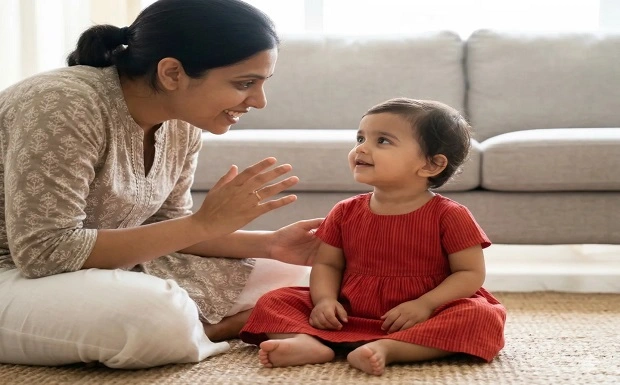
Is My Child a Late Talker?
- A Guide to Speech and Language Delays for Parents
If you have ever found yourself searching the internet at 2:00 AM, comparing your toddler’s progress to "typical" milestones, you are not alone. Communication is the foundation of how children connect with the world, and and when that foundation feels uncertain, it’s natural for worry to set in. Let’s take a closer look to understand this better.
Understanding the Basics: Speech vs. Language
While often used interchangeably, "speech" and "language" refer to two distinct areas of communication.
- Speech is the physical act of producing sounds. It involves the mechanics: articulation (how we make sounds), voice (how we use breath and vocal folds), and fluency (the rhythm and smoothness of talk).
- Language is the message itself. It includes receptive language (understanding what others say) and expressive language (the ability to share thoughts, wants, and needs).
A child with a speech delay may have a lot to say, but the "how" of saying it can be difficult, and their words may be hard to understand. A child with a language delay may pronounce words clearly but struggle to put them together into meaningful sentences or follow simple directions.
Milestones and Red Flags
Every child follows a unique timeline, but there are general windows for mastery. Professionals look for specific patterns to distinguish between a "late bloomer" and a child who needs support.
- General Milestones:
- By 12 Months: Responding to their name, using gestures like waving "bye-bye," and saying one or two simple words like "Mama" or "Dada" with meaning.
- By 18 Months: Having a vocabulary of at least 10–20 words and following one-step directions without gestures.
- By 24 Months: Combining two words into simple phrases (e.g., "more juice") and having a vocabulary of at least 50 words.
- By 3 Years: Being understood by strangers about 75% of the time and using three-word sentences.
- Clinical Red Flags: You should consult a professional if your child shows these signs:
- By 12 months: No babbling or gestures (pointing/waving), not responding to name when called, not a single meaningful word.
- By 18 months: Fewer than 5 or 6 meaningful words or not following simple instructions.
- By 24 months: Fewer than 50 words, no two-word combinations, or incomprehensible speech.
- At any age: A regression or loss of previously held language or communication skills.
Common Myths
| Myth | Reality Check |
| “They’ll grow out of it.” | Some children catch up, but persistent delays often continue without help. Early evaluation by doctor and intervention by a speech-language pathologist (SLP) improve outcomes. |
| “Boys just talk later than girls.” | Boys may have a slightly broader range in milestones, but significant delays should never be dismissed based on gender. |
| “Baby-talk harms speech development.” | Baby-talk, when used with correct grammar, supports language learning and keeps children engaged. |
| “Pandemic babies are naturally behind.” | Limited social exposure doesn’t automatically cause delays. Quality caregiver interaction at home is more important than daycare or playgroups. |
| “Speaking two languages confuses them.” | Bilingualism does not cause speech delay. Children can learn multiple languages simultaneously, often with cognitive and social benefits. |
| “Speech therapy isn’t needed until school age.” | Waiting until school can miss the critical early years when the brain is most adaptable. Early therapy is far more effective. |
The Impact of Screen Time Excessive and unsupervised screen time—more than 3 hours daily—is significantly associated with speech and language delay. Passive consumption of non-interactive content, like cartoons, can displace the vital "conversational turns" with caregivers that stimulate neural circuits for language. However, "smart screen time" that is interactive and includes parental co-viewing can act as a protective factor.
Why Do Delays Happen?
It is vital to know that delays are almost never caused by something parents did or didn't do.
Common causes include:
- Hearing Loss: Even chronic ear infections can lead to hearing loss and hinder a child's speech and language development.
- Oral-Motor Issues: Difficulty coordinating the muscles of the mouth, sometimes seen in conditions like cerebral palsy or developmental apraxia.
- Developmental Disorders: Including Autism Spectrum Disorder (ASD) , Attention Deficit Hyperactivity Disorder ( ADHD), intellectual disability.
What You Can Do at Home
Parents are a child's first and most important teachers. You can turn everyday moments into learning opportunities using these strategies:
- Parallel Talk: Narrate what you or your child is doing (e.g., "I'm stirring the batter", “I am combing your hair” etc).
- Offer Choices: Instead of just giving them an item, ask "Do you want the blocks or the bubbles?" to motivate them to use language.
- Expectant Waiting: Pause mid-activity (like blowing bubbles) and wait for your child to request more through a word or gesture.
- The "One-Up" Rule: Expand on what your child says. If they say "Car," you say "Big car" or “ Red Car”
- Model Simple Language: Use clear pronunciation and simplified sentences during daily routines.
- Be Silly: Children respond to strange sounds and exaggerated speech; get on their level and make animal sounds or funny faces.
Taking the Next Steps
If you have concerns about your child’s speech, trust your instinct—parents are often the first to notice when something isn’t quite right. Don’t wait for others to reassure you to “give it more time.” Seeking guidance early does not label a child; it simply opens the door to support. Consult your Pediatrician or Pediatric Neurologist and get your child evaluated including hearing test. Early intervention works best because a young child’s brain is highly adaptable, and timely stimulation can significantly improve communication, learning, and social development. Even if everything turns out to be normal, you gain reassurance. But if there is a delay, acting early can make a meaningful, long-term difference in your child’s developmental journey.