
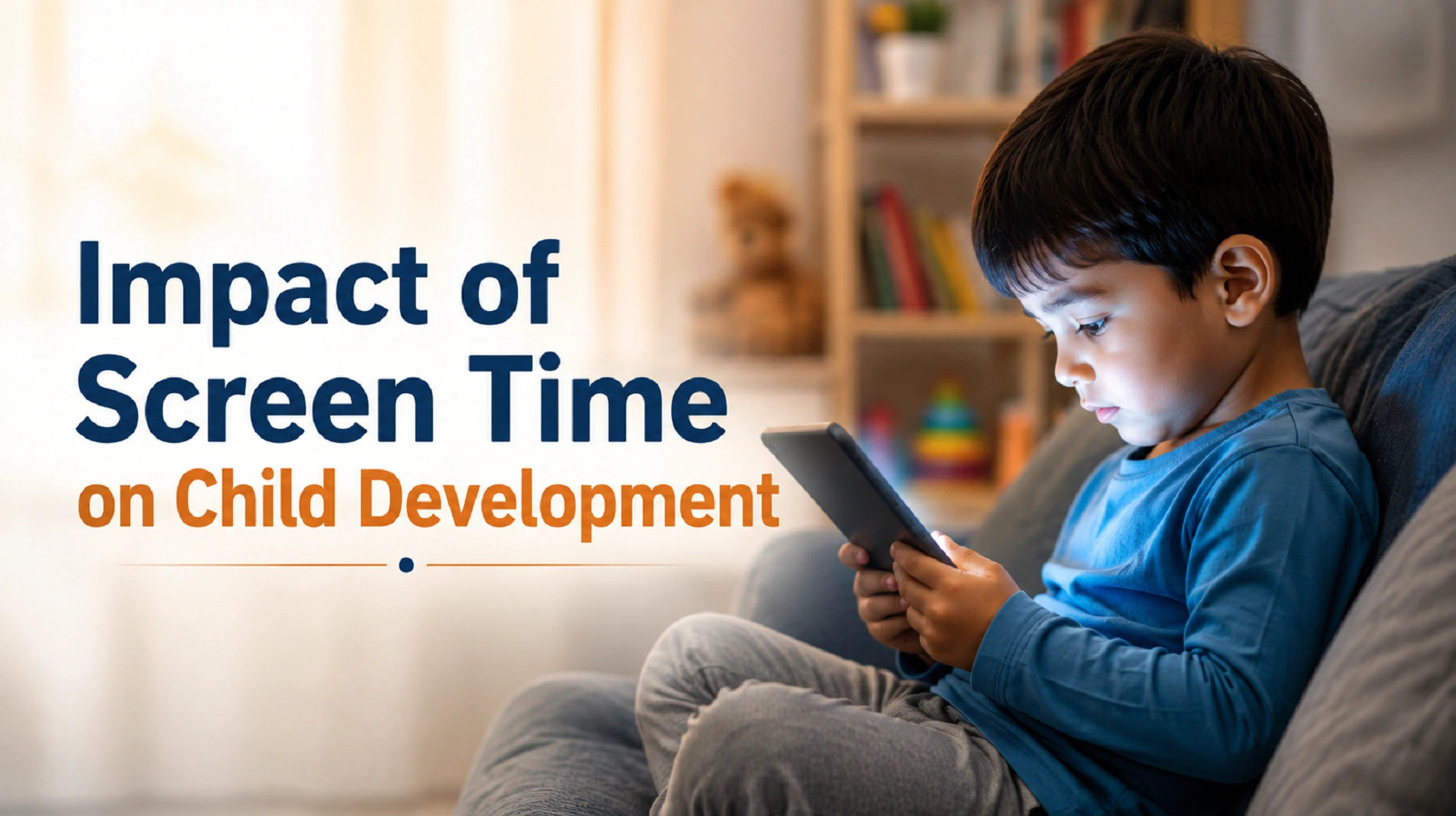
Impact of Screen Time on Child Development
Screens have become an integral part of our daily lives in the digital world we inhabit. Children are now being exposed to screens at a younger age than before, be it for online learning, entertainment, social interaction, or educational apps. While there are plenty of opportunities to learn through technology, too much screen time can affect a child’s physical, emotional, cognitive, and social development. Parents need to know the effects of screen time on child development and the necessity of keeping a healthy balance of screen time so they can promote their children’s overall health.
What is Screen Time?
Screen time is the time children spend looking at digital devices, including smartphones, tablets, televisions, computers, laptops, gaming consoles, and other electronic screens. These include watching videos, playing video games, attending online classes, surfing the internet and social media, etc.
Not all screen time is detrimental. Learning programs, interactive learning apps, and supervised virtual contact with family members can positively influence a child’s learning and growth. Problems arise when recreational screen time exceeds the time needed for these vital activities such as physical play, sleep, reading, face-to-face interactions, and family bonding.
According to the American Academy of Pediatrics (AAP), screen time guidelines should be based on a child’s age and emphasize more high-quality programming and active parental involvement.
Digital devices offer benefits, but excessive screen time, particularly when unsupervised, can negatively impact various aspects of a child’s growth and development.
The Negative Effect of Screen Time on Child Development
One of the most obvious consequences is the effect on cognitive development. Young children benefit most from face-to-face interaction with caregivers and the environment. Much screen time in those early years can affect the development of language, creativity, problem-solving skills, and attention span. Too much screen time can lead to speech delays and concentration difficulties. to speech delays and difficulties concentrating.
Screen time can also impact emotional and behavioral health. Children on digital devices for long hours can become irritable, moody, or have trouble regulating emotions. Overstimulation of a developing brain can result from too much exposure to fast-paced content and can cause children to have trouble focusing on slower-paced classroom activities.
Sleep problems are another common issue. Digital screens emit a blue light that inhibits the sleep-regulating hormone melatonin. Kids who watch screens close to bedtime go to sleep later, receive less sleep, and have more trouble sleeping. This behavior can affect learning, mood, and overall health.
Sedentary behavior can also affect physical health. Spending long hours on the screen denies children the chance to have outdoor play and exercise, which can result in childhood obesity, poor posture, neck and back pain, eye strain, and a decrease in physical fitness.
Equally important in childhood is social development. Too much time on screens can translate into less face-to-face interaction with family and friends and less opportunity to develop empathy, communication skills, emotional intelligence, and healthy relationships. Kids can also become overly addicted to digital entertainment, hindering their imagination and social skills.
Sometimes, academic performance declines when recreational screen time interferes with homework, reading habits, or classroom learning. Digital distractions can make it challenging for kids to focus and manage their time.
The Importance of Keeping Balance
The technology is not the enemy; it is how it is used. Instead of eliminating screens, parents should focus on achieving a positive balance between digital activities and real-life experiences.
Children do so well with things that promote creativity, movement, and socialization. Books are excellent for brain development. Playing outside, playing sports, doing art and music, doing puzzles, and spending quality time with family are all great for brain development and emotional health.
Parents also play an important role in modeling healthy digital habits. Children often mimic what adults do. Good habits can include setting limits on screen time for each family member during family time and focusing on quality conversations. Having regular screen-free times such as at mealtimes, bedtime, and when family members are together helps children learn that screens are a part of a balanced life.
How to Manage & Limit Screen Time in Children:
It doesn’t mean you have to give up technology altogether to manage screen time. Instead, parents can set limits that are realistic, appropriate to the child's development, and that will promote healthy development.
Set limits on screen time based on a child’s age and development, beginning with daily time limits. Parents should seek interactive, educational rather than passive entertainment, and kids under the age of 13 should use devices with adult supervision.
Establishing device-free areas like the bedroom and the dining table can help us sleep better and connect with our family. Encouraging outdoor play, hobbies, sports, storytelling, and creative activities helps in physical and mental development and automatically curbs the addiction to the screens.
Another important aspect is controlling the quality of the digital content. Parents should choose educational programs for the child’s age and talk to older children regularly about online safety. You can also use parental controls to reduce notifications and power down screens at least an hour before bed to help build positive digital habits.
Open communication also helps children understand why there are limits on screen time and makes them more likely to cooperate rather than resist.
Conclusions
Digital technology is ever-present in childhood today and may offer valuable educational and recreational experiences. But too much screen time without moderation can have a negative impact on children’s cognitive, emotional, physical, social, and behavioral development. By establishing healthy boundaries, encouraging active lifestyles, fostering meaningful family interactions, and selecting quality digital content, parents can assist children in harnessing the advantages of technology while mitigating its risks. Children thrive, learn, and grow in a balanced approach to the digital and real worlds.
Why Ankura?
The Developmental Pediatrics & Child Health team at Ankura Hospital for Women & Children is committed to the physical, emotional, behavioral, and developmental health of each child. Our team of specialists provides comprehensive developmental evaluations, early intervention counseling, behavioral health counseling, growth monitoring, and family-centered care customized to each child’s needs. At Ankura, we have the latest diagnostic capabilities, evidence-based treatment options, and compassionate pediatric expertise to ensure every child receives the appropriate care at the appropriate time so they will achieve their highest developmental potential.