Recognizing Urological Emergencies in Children: Key Signs and Symptoms
How to Recognize Urological Emergencies in Children? “While it is widely known that one should take immediate action in an emergency, knowing what an emergency is, is the first step to action.”
Urological emergencies in children are the ones concerning the kidneys, urinary bladder, and the genitourinary complex. Pre-existing health conditions, injuries, or infections can lead to emergencies which require immediate attention. It is prudent for the parents to know about them and recognize them to help their children get the cure they need in time.
What can cause Urological Emergencies in Children?
Pediatric urological emergencies can arise from a variety of conditions. Testicular torsion, where the spermatic cord twists and cuts off blood supply to the testicle, requires immediate attention. Urinary retention due to obstructions or nerve-related issues can also lead to emergencies. Obstructive uropathy, caused by blockages like kidney stones or congenital abnormalities, can lead to irreversible kidney damage if untreated. Severe urinary tract infections (UTIs) that spread to the kidneys (pyelonephritis) also pose significant risks, potentially leading to systemic complications or kidney damage. Other such conditions, listed in detail below require prompt medical intervention to prevent long-term consequences.
General Warning Signs Indicating a Urological Emergency
Severe pain in the abdomen, lower back, or genitalia. Pain in the side of the abdomen (flanks) also indicates a urological emergency.
Swelling of the Genitalia: Swelling of the scrotum or genitalia, especially when accompanied by redness and pain, indicates a urological emergency.
Inability to Urinate: In case the child is unable to pass the urine completely or reports a feeling of urinary retention then it may indicate serious obstruction in the urinary tract. This is accompanied by pain, abdominal distention, or discomfort.
A high Fever with urinary symptoms: could indicate a serious infection.
Vomiting, lethargy, poor food intake accompanied by urinary symptoms.
Common Urological Emergencies in Children Testicular Torsion
Testicular torsion occurs when the spermatic cord twists, cutting off the blood supply to the testicle.
What causes it?
Any healthy child, even without any predisposing health conditions, can get a testicular torsion. It is most common in adolescent boys but can happen at any age, including in newborns and young children. Testicular torsion is typically caused by an abnormality in how the testicle lies in the scrotum (bell- clapper testis), allowing it to twist freely. Children with untreated undescended testicles are more prone to developing it.
How to Identify Testicular Torsion
The child will have a sudden, severe pain in one testicle
Presence of swelling and redness in the scrotum
A feeling of nausea and vomiting
Pain radiating to the abdomen
If not treated within 6-12 hours, testicular torsion can lead to permanent damage or loss of the testicle. Thus, it requires emergency medical attention and surgery.
Urinary retention is the inability to pass urine despite having a full bladder. It can occur due to an obstruction, nerve issues, or infection.
How to Identify Urinary Retention?
-Child has severe abdominal pain or distention
-The child reports an urgent need to urinate but is unable to do so
-In severe cases, one can see the bladder bulge
Prolonged retention can cause bladder damage or kidney injury, and it thus needs immediate medical attention.
Phimosis
Phimosis is the inability to retract the foreskin over the glans penis. A tight foreskin is normal in babies and young boys. However, this condition can become a medical concern if it leads to symptoms such as painful urination, swelling, and tenderness of the penis, recurrent infections, blood or discharge in urine, or ballooning of the foreskin during urination. A urological emergency arises when phimosis causes urine retention.
Paraphimosis
Paraphimosis occurs when the foreskin of an uncircumcised penis becomes trapped behind the head of the penis and cannot be pulled forward. It can occur due to injury, infections, or improper handling and cleaning of the penis, by caregivers or children.
How to Identify Paraphimosis?
-The child will have pain and swelling in the penis
– There will be an evident discoloration of the penis tip
– Child will report difficulty in urinating, due to pain and discomfort
If left untreated, paraphimosis can restrict blood flow to the penis, leading to tissue damage or necrosis. Thus, it requires urgent care.
Severe Urinary Tract Infections (UTIs)
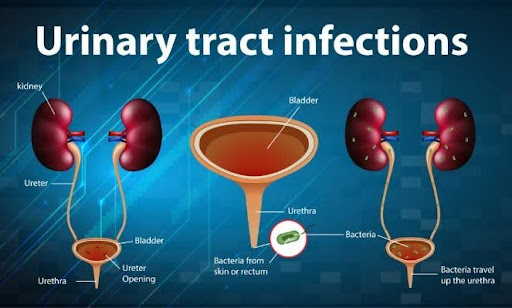
UTIs are common in children, but a severe infection that spreads to the kidneys (pyelonephritis) can be a medical emergency.
This is a blockage in the urinary tract, which can lead to kidney damage if not promptly treated. It can occur due to congenital abnormalities, injuries, kidney stones, or tumors.
How to Identify Obstructive Uropathy?
– Decreased urine output or blood in the urine
– Inability to pass urine or difficulty in passing urine
– Child has abdominal or flank pain
-Vomiting and lethargy along with urological symptoms
Without intervention, the blockage can lead to permanent kidney damage or failure, thus it needs urgent care.
Urinary stones
Like adults, children too can develop urinary stones. These stones can lead to urological emergencies, particularly when they lead to complications such as obstruction of the urinary tract, infection, or severe pain. A blocked urinary tract can result in hydronephrosis (swelling of the kidney), impairing kidney function. If an infection occurs alongside the blockage, it can rapidly progress to urosepsis, a life-threatening condition.
How to Identify an Emergency due to Urinary Stones?
-Intense, unrelenting pain (On the side of the abdomen and lower back)
– Pain or difficulty while passing urine
– Fever accompanied by urological symptoms – Nausea, vomiting accompanied by urological symptoms
– Complaint of difficulty in passing urine
– Blood in urine
An immediate medical evaluation is crucial to prevent complications.
Zipper Entrapment
This is when one accidentally drives a pant zipper onto the penis. If the injury is severe, it could be a urological emergency.
How to Identify the Emergency?
-Swelling of the Penis
-Bleeding with visible cuts or lacerations on the penile skin/ active bleeding
-Difficulty in urinating
-Discolouration of the trapped area
-Signs of infection, such as redness, warmth, or pus in the injured area
Parents should avoid forceful attempts to release the zipper, as this can worsen the injury. Immediate medical attention is advised to safely remove the zipper and assess for any underlying damage.
Parents and caregivers should be vigilant and seek timely care to manage urological emergencies in children.
Our healthcare specialists are equipped with the knowledge and skills to provide you with the support you require. From consultation to diagnosis to treatments, our experts are dedicated to helping you.