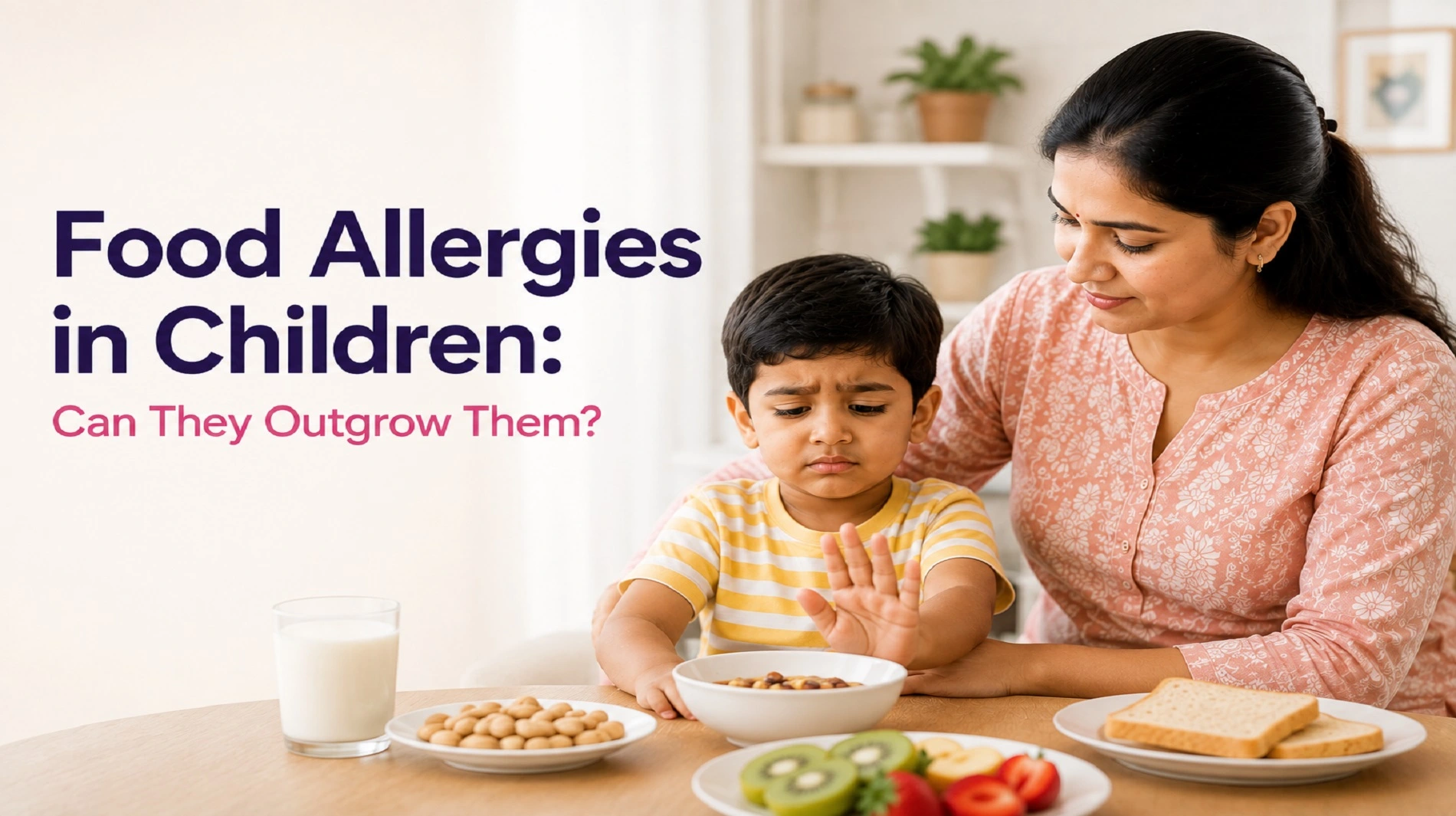
Food Allergies in Children: Can They Outgrow Them?
Children are developing food allergies at an alarming rate, and this is a great worry among parents. Food allergy happens when the immune system mistakenly recognizes the food protein as dangerous and sets off an allergic response. Some children develop allergies that last only until adulthood, while others will never outgrow their allergies.
Understanding which food allergies are more likely to resolve and how to manage them can help parents keep their children safe and healthy.
What is a food allergy?
A food allergy is an immune system reaction that occurs shortly after eating a particular food. Even a small amount of the allergen can trigger symptoms ranging from mild skin rashes to severe, life-threatening reactions.
Food allergies are different from food intolerance. While food intolerance mainly affects digestion, food allergies involve the immune system and require careful medical attention.
Common food allergies in children
The most common food allergens in children include cow's milk, eggs, peanuts, tree nuts, soy, wheat, fish and shellfish.
Among these, milk, egg, soy, and wheat allergies are more commonly outgrown during childhood, whereas peanut, tree nut, fish, and shellfish allergies tend to persist longer.
Can children outgrow food allergies?
Yes, many children can outgrow certain food allergies, but it depends on the type of allergy and the individual child.
Cow milk allergy: The majority outgrow this by 5 years, although there are some exceptions to that rule.
Egg allergy: Children develop tolerance to this food over time.
Soy and wheat allergy: Children usually grow out of this by the time they get to school going age.
Peanut allergy: Some outgrow this, although most carry this for their entire lives.
Tree nuts, fish, and shellfish allergy: The chance of growing out of this is very minimal.
It is important never to reintroduce an allergenic food without consulting a pediatric allergy specialist, as reactions can be unpredictable.
Signs your child may have a food allergy
Symptoms usually appear within minutes to two hours after eating the food and may include:
- Hives or itchy skin
- Swelling of the lips, tongue, or face
- Vomiting or diarrhea
- Abdominal pain
- Wheezing or coughing
- Difficulty breathing
- Dizziness or fainting
- Anaphylaxis (a severe medical emergency)
Managing food allergies
Even though there is no universal treatment for food allergies, good management reduces the chances of suffering from an allergic reaction.
Parents need to:
- Avoid foods that may cause allergy.
- Always read food labels.
- Inform schools, caregivers, and relatives about the allergy.
- Carry emergency medication if any is prescribed.
- Keep an allergy action plan handy for emergencies
- Attend regular follow-up appointments to monitor whether the allergy has improved.
When should you consult a doctor?
Consult a pediatric allergy specialist if your child:
- Develops allergic symptoms after eating certain foods.
- Has repeated skin rashes or hives after meals.
- Experiences vomiting or breathing problems following food intake.
- Has eczema along with suspected food allergies.
- Needs guidance on safely introducing allergenic foods.
Early diagnosis and appropriate management can help prevent serious complications and improve your child's quality of life.
Why choose Ankura Hospital for pediatric food allergy care?
At Ankura Hospital, our experienced pediatric allergy specialists provide comprehensive evaluation and management of food allergies in children. We focus on accurate diagnosis, personalized treatment plans, nutritional guidance, and long-term follow-up to ensure your child's healthy growth and safety. Our multidisciplinary team supports families with expert advice, emergency preparedness, and compassionate care at every stage.