
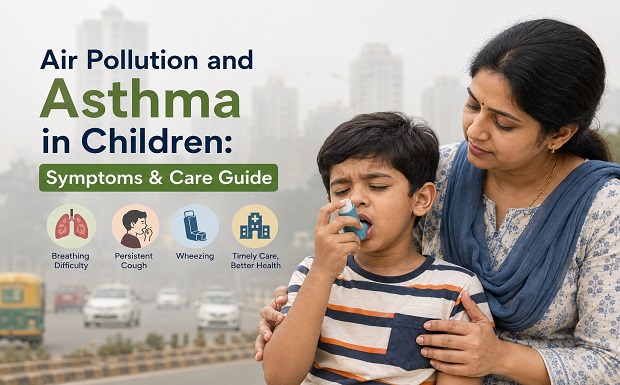
Air Pollution & Asthma in Children
Concern over air pollution is rising, particularly in cities and metropolitan regions. It can have a major effect on children's health in addition to adults. Asthma is one of the most prevalent illnesses associated with air pollution. Understanding how air pollution affects asthma, its symptoms, and ways to manage it can help parents protect their child’s health.
What is asthma?
Asthma is a condition that causes the airways to swell, narrow and fill with mucus. This can make it hard to breathe or cause other symptoms, like chest tightness, cough and wheezing.
How does air pollution affect asthma?
Small particles and gases , to precise PM50 or less in the air can pass through the nose or mouth and get into the lungs. Both long-term and short-term exposure to air pollution can cause many health problems.
Breathing in air pollution can cause: Breathing problems, asthma attacks, difficulty breathing deeply, decreased lung growth in children, reduced lung function, needing more doses of asthma drugs I e poorly control Asthma , needing emergency treatment for asthma i.e called exacerbation of Asthma, heart and blood vessel diseases, and adverse birth outcomes (such as preterm birth, low birth weight, stillbirth)
Children are more sensitive because their lungs are still developing, and they breathe faster than adults, taking in more polluted air.
Common triggers related to air pollution
Several pollution-related factors can trigger asthma symptoms in children:
• Vehicle exhaust and traffic pollution
• Dust and construction activities
• Smoke from burning garbage or firecrackers
• Indoor pollution like cigarette smoke or cooking fumes
• Seasonal changes and pollen mixed with polluted air
Symptoms
Parents should look out for early signs of asthma, especially when pollution levels are high.
Symptoms of asthma include:
Chest tightness, pain or pressure
Fatigue during play or physical activity.
How is asthma diagnosed?
Pediatricians usually diagnose asthma based on the child’s symptoms, medical history, and physical examination, i.e observation based Diagnosis.
Medical history- The pediatrician will ask about breathing difficulties, triggers, family history of asthma or allergies, and frequency of symptoms.
Physical exam- This includes checking breathing patterns, listening to the lungs, and overall health assessment.
Lung function tests- In older children, simple breathing tests may be done to measure how well the lungs are working.
In some cases, allergy testing may also be suggested to identify specific triggers.
Simple ways to manage asthma at home
While asthma cannot be completely cured, it can be effectively managed:
• Avoid outdoor activities when pollution levels are high
• Use masks when stepping outside in polluted environments
• Keep indoor air clean and well-ventilated
• Avoid exposure to smoke and strong odors
• Follow the doctor’s prescribed inhalers or medications regularly
• Maintain a healthy diet and good hydration
Always follow the asthma action plan given by your doctor.
When should parents consult a pediatric allergist?
Seek medical help if:
Asthma symptoms are frequent or worsening
The child has difficulty breathing or rapid breathing
There is no relief even after using prescribed medication
The child wakes up at night due to coughing or breathlessness
Lips or face turn bluish (emergency sign)
Conclusion
Air pollution and asthma are closely linked, especially in children. While pollution cannot always be avoided, taking preventive steps and managing triggers can make a big difference. Early diagnosis, proper care, and regular follow-ups help children lead a healthy and active life despite asthma.
Why should children with asthma receive care at Ankura Hospital?
Through thorough examination and personalised treatment plans, we at Ankura Hospital offer children with asthma compassionate and specialised care. Our team of experts focuses on determining triggers and advising parents on ways to manage asthma effectively. With a child-friendly environment and dedicated support, Ankura ensures your child breathes easier and stays healthier.