
ADHD in Children: Practical Approaches to Diagnosis, Treatment, and Daily Management
One of the terms we hear more often in the modern world is Attention-Deficit/Hyperactivity Disorder, or ADHD. Understanding this condition can help parents and teachers recognize the early signs and help children in their everyday lives.
Attention-Deficit Hyperactivity Disorder (ADHD) is a neurodevelopmental condition that affects millions of children worldwide. Characterized by symptoms such as inattention, hyperactivity, and impulsivity, ADHD can significantly interfere with academic performance, family life, and social interactions. Early diagnosis and a structured management plan can greatly improve the quality of life for both children and their families.

Understanding ADHD in Children
ADHD is a common neurodevelopmental disorder that affects a child’s ability to focus, sit still, and control impulses. It typically presents in childhood, often before the age of 12, and persists into adolescence and adulthood in many cases.
ADHD can manifest in three primary forms:
- Predominantly Inattentive Presentation – This is a type of ADHD where a child mainly struggles with attention and focus rather than hyperactivity. These children may seem daydreamy, easily distracted, forgetful, or disorganized. They might not follow instructions well or finish tasks, often leading to underperformance in school. Because they are not disruptive, their symptoms are sometimes overlooked. Early recognition and support can help them manage daily challenges effectively.
- Predominantly Hyperactive-Impulsive Presentation – This is a type of ADHD where hyperactivity and impulsive behavior are the main symptoms. Children with this type may constantly fidget, talk excessively, have trouble sitting still, or act without thinking. They may interrupt others, struggle to wait their turn, and seem always “on the go.” These behaviors can affect their learning and social interactions. Early guidance and structure can help them manage their energy and behavior better.
- Combined Presentation – This is when a child shows significant symptoms of both inattention and hyperactivity-impulsivity. These children may struggle to focus, get easily distracted, forget things, and also be restless, talkative, and impulsive. It’s the most common type of ADHD. Because it affects multiple areas of behavior, early diagnosis and a well-rounded treatment plan are important for helping the child succeed at home, school, and in social settings.
Boys are more frequently diagnosed with ADHD than girls since girls display less overt hyperactivity.
How is ADHD Diagnosed?
ADHD is diagnosed through a comprehensive evaluation by a pediatrician, child psychologist, or psychiatrist. There is no single test for ADHD. Diagnosis involves gathering information from multiple sources, including parents, teachers, and caregivers, and assessing the child’s behavior across different settings (home, school, etc.).
What can Parents and Caregivers Look For?
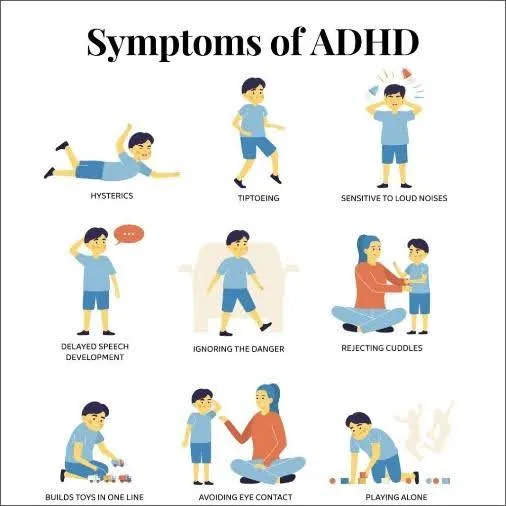
Since ADHD can present in multiple ways, parents and caregivers should look out for signs of all types to identify it correctly.
Signs of Inattention-
- Easily distracted by small things
- Difficulty staying focused on tasks or play
- Frequently loses things (toys, books, school supplies)
- Avoids or dislikes tasks requiring sustained mental effort (like homework)
- Doesn’t seem to listen when spoken to
- Makes multiple careless mistakes
- Trouble organizing tasks and activities
Signs of Hyperactivity-
- Constantly moving (hands, legs, pen, body)
- Talks excessively or loudly
- Trouble playing quietly
- Always on the go
- Always interrupts conversations
- Has difficulty waiting their turn
- Acts without thinking, leading to accidents or rule-breaking
- Emotionally reactive or impatient
Parents should note that getting distracted or displaying high energy occasionally is normal in children. In ADHD, symptoms are persistent, more severe, and interfere with the child’s ability to function. Parents should not self-diagnose or label their child or any condition; instead, take note of doubtful symptoms and consult an expert.
How will a healthcare provider diagnose ADHD?
The following steps are involved in the diagnosis of ADHD
Clinical Evaluation
Clinical Evaluation
This involves a thorough assessment by a pediatrician, psychologist, or psychiatrist. In this process, the following can be expected:
- An expert will take a detailed history of the child
- Interviews with parents, teachers, and caregivers
- Use of standardized rating scales to assess child’s condition
Rule Out Other Conditions
Many conditions mimic or coexist with ADHD, such as anxiety disorders, learning disabilities, sleep disorders, and autism spectrum disorder. After clinical assessment and a comprehensive evaluation is done to differentiate ADHD from these conditions.
Check the Diagnostic Criteria
There are specific diagnostic criteria for each disease. In order to make a diagnosis, these criteria must be met. Some criteria that a healthcare provider may check for include:
- Symptoms present for at least six months
- Symptoms observed in two or more settings (home, school, etc.)
- Clear evidence of functional impairment
Treatment Options for ADHD
Each child is unique, and so is their condition. After a detailed assessment, the healthcare provider suggests a personalised plan that suits the specific needs of the child. The mainstays of treatment include:
Medication: Medication is often used to help manage ADHD symptoms by improving attention, focus, and impulse control. It doesn’t cure ADHD, but it can make it easier for children to function at home, school, and in social situations. Medications are usually part of a broader treatment plan that includes behavioral therapy and support from parents and teachers. A doctor will carefully assess the child’s needs and monitor for any side effects to ensure the best results.
Behavioral Therapy: Behavioral therapy is a key part of managing ADHD, especially in young children. It focuses on teaching children positive behaviors and reducing unwanted ones through consistent structure, clear rules, and rewards. Therapists also work with parents to improve communication, set routines, and use positive reinforcement. Over time, behavioral strategies help children improve focus, self-control, and social skills, leading to better outcomes at home and school.
School-Based Support: School-based support plays a crucial role in helping children with ADHD succeed academically and socially. This may include individualized learning plans, classroom accommodations like seating near the teacher, extra time on tasks, and breaks to manage restlessness. Teachers can use clear instructions, visual cues, and positive reinforcement to guide behavior. Collaboration between educators, parents, and specialists ensures that the child receives consistent support tailored to their needs.
Psychotherapy: Psychotherapy helps children with ADHD understand their feelings, build self-esteem, and develop coping skills. Through talk therapy or cognitive-behavioral techniques, children learn how to manage frustration, improve relationships, and make better choices. It also offers a safe space to discuss challenges and build emotional resilience. Therapy can be especially helpful when ADHD occurs alongside anxiety, depression, or low confidence.
Practical Tips for Parents and Caregivers
Managing ADHD at home requires patience, consistency, and understanding. Here are some practical tips:
- Set Clear Expectations: Use simple and direct instructions. Be consistent with rules and consequences.
- Create a Clear Routine: Predictability helps children with ADHD stay organized and reduces anxiety.
- Use Visual Aids: Charts, timers, and checklists help reinforce routines and responsibilities in children with ADHD.
- Limit Distractions: Provide a quiet, clutter-free workspace for homework and activities.
- Encourage Physical Activity: Regular exercise can help manage hyperactivity and improve focus.
- Monitor Screen Time: Too much screen time can worsen attention issues.
- Praise Efforts: Positive reinforcement goes a long way in building self-esteem.
Emotional and Social Development
Children with ADHD may find it hard to manage emotions and build friendships. Supporting them with patience, clear rules, and encouragement helps boost their confidence. Teaching them how to express feelings, take turns, and solve problems calmly can improve their social skills.
Joining support groups can be very helpful for both children and parents. These groups offer a safe space to share experiences, learn coping tips, and feel less alone. With love, structure, and the right support, children with ADHD can do well emotionally and socially.
When to Seek Professional Help?
If your child shows persistent behavioral issues that interfere with learning or relationships, consult a healthcare professional. Early intervention can prevent long-term academic and emotional difficulties in children with ADHD. If you suspect your child may have ADHD, don’t hesitate to seek professional guidance. Early action makes all the difference.
Parents should remember that ADHD is a complex but manageable condition. With a combination of medical treatment, behavioral strategies, school support, and a nurturing home environment, children with ADHD can be at their best. Ongoing education for parents, teachers, and caregivers is vital to ensure these children reach their full potential.