Behavioural Therapies for Anxiety in Children: The Latest Advances
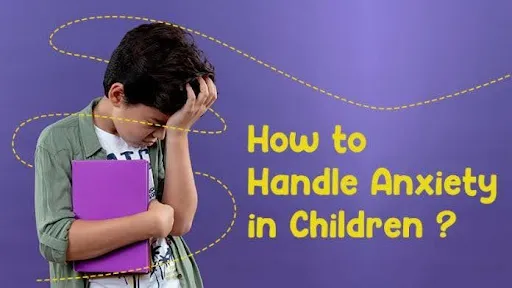
It is normal to have some anxiety and fear as a body’s natural response to notice certain dangerous situations or threats and focus on staying safe, but it is not normal if the anxiety goes beyond the regular nervousness and slight fear, interfering with the ability to function normally.
People of all ages, including adolescents, children, and adults, can experience anxiety disorders, which are the most common type of mental disorder in pediatric populations.
Childhood anxiety disorders are different from typical fears or anxieties because they involve more intense emotional reactions and extreme avoidance behaviours, and last longer than expected. They often include emotional outbursts such as crying or tantrums.
In recent years, there have been exciting breakthroughs in pediatric psychopathology, helping many children overcome significant fears, anxiety, distress, and avoidance of feared stimuli.
Following is some of the common anxiety disorders and the latest advances in psychological therapies that need to be understood by every parent if your child has symptoms of excessive worry and persistent fear, difficulty concentrating, being easily agitated, tenseness, or inability to relax.
What is anxiety?
What is anxiety?
Anxiety disorders are a group of mental health conditions characterized by continuous worry or fear, the feeling of dread, uneasiness, and stress that is out of proportion to the actual emotions and can interfere with daily life. These disorders can involve intense physical symptoms, emotional distress, and avoidance behaviours.
These disorders typically begin early in life and are among the first types of disorders to emerge. Below mentioned are some of the common conditions that are often seen in kids that continue to adolescence and adulthood if left untreated:
Common conditions
Common conditions
Separation anxiety (SA) disorder: It is more common in babies and very young children, typically developing early in most children between 8 and 12 months old. The kids who have this condition fear strangers, don’t feel safe when parents are not around, and outgrow the fear of being apart from a parent.
Generally, it goes away by the time the kids grow up and enter school, but some kids show more extreme distress or worry about separations than other kids of their age, and that continues for a long time. They may struggle to sleep alone without their parents nearby.
If the parent doesn’t see any improvement in your child or has any concerns, it is recommended to consult a child’s healthcare professional.
Social anxiety disorder: In this condition, kids feel an intense fear of being judged or rejected in social situations, and they fear public speaking due to the thoughts of what others will think or say about them and worry about embarrassing themselves. They might feel so uncomfortable to interact with others at school or other social gatherings.
Some kids worry about being watched when eating and skip lunch at school, so they avoid school or friends for this reason. They might feel tired, or sick or have symptoms such as shortness of breath, racing heart, blushing, or feeling shaky.
Some kids only have a fear of speaking in public, some kids feel uncomfortable interacting with new people, and some feel worried about being watched by them. These variations can suggest not all kids with social anxiety have the same behaviours. It is crucial for every parent to monitor their actions for timely diagnosis and management.
Generalized anxiety disorder: Generalized anxiety disorder (GAD) is one of the common mental health conditions that is characterized by continuous and excessive anxiety and worry about carrying out everyday things like homework, health, making mistakes, or about the future, more than other children of their age. Some kids may feel restless, easily annoyed, and nervous about things like attending parties, loved ones, war, weather, and getting hurt, where their worries may not be realistic most of the time.
Moreover, their worries may change over time, but they’re often worried about something that makes it tough to focus on studies, have fun, and eat and sleep well, ruining their daily activities and maintaining relationships.
Children with this condition, compared to normal children, describe a greater number of more severe, impairing worries. Are you finding it hard for your child to feel ok, no matter how much you say they are not trusting and ask over and over about something they are concerned will happen? It is not too late to consult a child healthcare professional to help your child to overcome GAD.
Panic Disorder: Children with panic disorder feel sudden extreme fear and anxiety for no clear reason, along with physical symptoms such as heart palpitations (racing heart), dizziness, feeling shaky, trembling, and shortness of breath. These attacks can occur at any time without any sudden warning and tend to go away within minutes to hours.
Panic disorders can be more frequently seen in teens than in younger kids and also be a part of other types of anxiety disorders, depression, and post-traumatic stress disorder (PTSD).
Specific phobias: With a specific phobia, children may have an extreme fear that is out of proportion with the actual threat of danger for things like needles, blood, thunderstorms, darkness, choking, animals, people in costumes, etc.
Kids with specific phobias might feel terrified and hard to comfort; as a result, they often try to avoid the things that scare them. As mentioned before, fear is the normal defence mechanism of the body, a survival response that protects us from danger, but anything more than normal is harmful. While phobias can involve the same things as ordinary fears, the effects of them are more severe. Hence, it is crucial to seek help as soon as you notice any phobia symptoms in your child.
Selective Mutism: It is also a type of mental health condition that can start at any age, often in early childhood (between ages 2 and 4) characterized by much anxiety or fear of speaking in certain situations, including at home, social settings (school or with unfamiliar people) affecting the social interactions, academic performance, and overall well-being. It is often first noticed when your kid begins to interact with people outside of your family. This mutism is often linked to other anxiety disorders such as social anxiety if left untreated it can continue into adulthood. However, a child can successfully overcome this if it is diagnosed at an early stage and appropriately managed.
Typically, anxiety disorders arise during childhood or adolescence, with separation anxiety appearing first. Social anxiety disorder, panic disorder, and generalized anxiety disorder become more common in late childhood and adolescence.
Common signs and symptoms
The following are common signs and symptoms often seen in children with anxiety disorders:
Cognitive symptoms
- Poor concentration, confusion, distractibility
- Fear of negative evaluation by others
- Experiencing a mental breakdown
- Fear of losing control, physical harm
- Perception of unreality or detachment
- Poor memory and difficulty speaking
Physiological symptoms
- Palpitations, increased heart rate
- Shortness of breath, or rapid breathing
- Trembling, shaking
- Sweating, chills, hot flushes
- Dizziness, light-headedness
- Chest pain or pressure
- Weakness, faintness
- Tingling or numbness in extremities
Behavioural symptoms
- Seeking safety and reassurance
- Avoidance of feared situations or stimuli
- Restlessness, pacing, agitation
- Freezing or immobility
- Escape or flight responses
Affective symptoms
- Feeling tense, nervous
- Feeling impatient or easily frustrated
- Experiencing fear, terror, or extreme apprehension
- Feeling intense emotional outbursts (especially in toddlers)
- Have trouble sleeping, wake from nightmares, or be unable to sleep alone.
Various Treatment Approaches and Advances in Behavioral Treatment
Anxiety disorders affect approximately 15–32% of children and adolescents over their lifetime. These disorders can lead to various negative outcomes throughout development, including difficulties in daily life, impairments in academic performance and social interactions, and continued symptoms into adulthood.
Hence, early diagnosis and management can make a big difference in recovery. In the last few decades, researchers have made a lot of progress and using advancements in treating childhood anxiety. The journey of psychological therapies has evolved from basic to advanced techniques, with 2025 bringing remarkable progress. Some therapists are already employing new methods to enhance mental health and lower risks, while other promising techniques remain in the research phase and signify the future of psychological treatment.
The following outlines various approaches to behavioural therapy and child anxiety treatment methods for managing anxiety, ranging from basic to advanced levels.
Behavioural therapy and its latest advances:
It is a type of psychological therapy that focuses on changing behaviour by modifying a child’s responses to events and situations, aiming to teach new, more adaptive behaviours while eliminating or reducing problem behaviours.
- Applied behaviour analysis (ABA): It is a widely used approach in BT, particularly for children with autism spectrum disorder. It incorporates methods such as Pivotal Response Training (PRT), Positive Behavioral Support (PBS), and Early Intensive Behavioral Intervention (EIBI) to tackle behavioural challenges in kids.
- Cognitive behavioural therapy (CBT): CBT is also called pediatric behavioural therapy, the preferred (first-line) treatment for mild to moderate symptoms of anxiety disorders, and has been more extensively evaluated than any other intervention for anxiety disorders in children and adolescents. CBT for child anxiety has two components, including modifying thinking patterns (cognitive) and changing behavioural patterns (behaviour), focusing on identifying and modifying problematic thoughts and behaviours contributing to anxiety.
Generally, it consists of 12–18 (1-h) sessions and provides opportunities to practice skills in session and then assign homework for further refinement and generalization of these skills outside of the session. Behavioural therapy can begin for children as young as 2 years old, and it’s often most effective when started early.
CBT helps anxious kids to develop an awareness of problematic thinking patterns, changing them to more realistic ones or helping with alternative thoughts (more adaptive ones).
Behaviourally, it usually involves repeated gradual exposure to feared stimuli to decrease avoidance and promote new learning by using strategies including social skills training, relaxation strategies, and exposure techniques to modify behaviour.
- Exposure therapy: It is a type of CBT, that involves exposing the patient to the anxiety (fears) in a safe and controlled environment to overcome phobias, panic attacks, anxiety, and PTSD. It focuses on changing the response to the situation or objects that a child fears. Repeated exposure to the source of a specific phobia may help the child learn to manage the anxiety.
- Virtual reality exposure therapy (VRET): It is a novel intervention technique and offers a promising approach for treating anxiety disorders including specific phobias in children. VRET utilizes computer-generated virtual environments to expose children to feared stimuli in a controlled setting, allowing for gradual and individualized exposure.
- Dialectical Behaviour Therapy (DBT): In this approach, therapists combine CBT, behaviour therapy, and mindfulness, to effectively address the risk of suicidal ideation for children and teens with emotional regulation challenges.
- Play therapy: It is used to aid children in expressing emotions, developing coping mechanisms, and improving social skills through creative activities. A wide range of conditions can be addressed through this approach including depression, trauma, behavioural issues, anxiety, and difficulties in relationships.
- Group therapy: It is effective in treating anxiety in children, offering a supportive and social environment where they can learn coping skills and connect with other kids, providing a safe environment for kids with social anxiety to share their experiences, practice social interactions, and build a sense of belonging.
- Parent-Led CBT: This treatment approach is cost-effective and involves providing parents with resources and guidance to help them apply CBT principles in their child’s daily life.
Other treatment approaches:
- Pharmacology therapy: While CBT is the preferred approach for managing kids who have been experiencing mild to moderate-severe symptoms of anxiety disorders, pharmacologic treatment can be considered for the child or adolescents who have been suffering from moderate to severe symptoms.
First-line medications for anxiety disorders include selective serotonin reuptake inhibitors (SSRIs). These medications are effective and commonly used to treat pediatric anxiety disorders. Improvement typically begins within two weeks and gradually increases over twelve weeks. Additionally, higher doses may lead to better outcomes in some patients.
Certain SNRIs can be considered as second to third-line treatment options for children or adolescents who do not respond to an SSRI and should involve monitoring the vital signs, child’s weight, and cholesterol as some data suggests the side effects such as weight loss, vital sign changes, and raised cholesterol.
However selective serotonin reuptake inhibitors (SSRIs) and SNRIs (serotonin and norepinephrine reuptake inhibitors) are both types of antidepressants and have an FDA-boxed warning of raised risk of suicidal thoughts and behaviours in children and adolescents. Hence, it is suggested to discuss with doctors when obtaining informed consent and use medications selectively as per the instructions of your doctor.
Doctors initiate with the lowest dose available for the medication selected, with upward titration after the first week, if tolerated. However, symptoms can be regularly monitored after initiating the medications.
- Combination treatment: Cognitive Behavioural Therapy (CBT) combined with pharmacological treatment is the most effective approach for treating anxiety disorders in children, surpassing the benefits of either SSRIs or CBT alone. While both medication and CBT can be beneficial, their combination may lead to better outcomes, especially for children who do not fully respond to either treatment on its own.
In combination therapy, CBT is used to understand and manage the thoughts and behaviours that contribute to their anxiety, while medication can help regulate the neurotransmitter levels and alleviate symptoms of anxiety disorders. However, more research is needed comparing SSRI and CBT monotherapy to each other and to combined SSRI/CBT therapy.
- Non-sedating medications: Still, research is ongoing to develop new medications that can effectively decrease anxiety while minimizing side effects like sedation. As per NIHR Maudsley Biomedical Research Centre, BNC210 is the such type of drug, being developed to decrease anxiety without the potential for sedation.
- Brain stimulation (Transcranial direct current stimulation) (tDCS): It is a low-risk non-invasive brain stimulation technique that uses a low-intensity direct current to modulate neuronal activity in specific brain areas (prefrontal cortex). It is a potential treatment for major depressive disorder.
While research is ongoing, preliminary studies suggest tDCS may be safe and well-tolerated in children and adolescents, with potential benefits for various conditions.
tDCS is often used in combination with other therapies, such as occupational or physical therapy, to enhance the effects of rehabilitation or treatment.
Initial research on brain stimulation in children shows promise, particularly when used alongside cognitive training. However, more research is needed to confirm the promising initial results.
- TMS (transcranial magnetic stimulation): Transcranial magnetic stimulation (TMS) is increasingly being used in children, both for research and treatment of various neurological and psychiatric conditions
It is a non-invasive diagnostic and therapeutic technique that uses fluctuating extracranial magnetic fields to generate cortical currents for stimulating the cerebral parenchyma and is used to treat anxiety and depression, ADHD, schizophrenia, and Tourette syndrome, however, more studies are required to support safety.
Conclusion:
1 in every 8 children suffers from anxiety disorders, which affects their mental health and impacts their quality of life. Fortunately, over the past decade, behavioural treatment approaches for anxiety in kids have evolved significantly, and incorporating a more integrated and holistic approach leading to improved outcomes.
If your child is struggling with symptoms of anxiety disorder, don’t ignore it, and don’t think it is not a big issue as it not affecting physically. You know mental health is crucial for overall well-being and plays a significant role in building relationships, the ability to think, feel, and act, influencing how we handle stress, relating to others, and making decisions. Hence if you are a parent or caregiver and are seeking additional information regarding anxiety disorders. We are there for you to provide information and help to understand how you can best support your child, please contact us.