Fractures in Children: Why Prompt Treatment is Crucial for Growing Bones.

Fractures are a common injury in children because their bones are still growing and not fully developed, making them more fragile than adult bones.
What is a fracture?
What is a fracture?
A fracture refers to the breakage of a bone, as it has not been able to withstand the extreme force applied on it. Fractures are commonly referred to as broken bones. Arm fractures are more common than other types of bone breaks.
Common fractures in children:
- Broken collarbone or shoulder
- Broken arm
- Broken elbow
- Broken forearm, wrist, or hand
- Broken hip
- Broken thigh bone or knee
- Broken leg, foot, or ankle
How Are Fractures Different in Children?
The fracture in children can be quite different from that of adults, even at the same site. An injury to the ends of the bone may also involve the growth plate. A growth plate is an active part of the bone that continues its growth. Sometimes, this might interfere with normal bone development and cause problems like shortening or angulation of the bone.
The fracture in children can be quite different from that of adults, even at the same site. An injury to the ends of the bone may also involve the growth plate. A growth plate is an active part of the bone that continues its growth. Sometimes, this might interfere with normal bone development and cause problems like shortening or angulation of the bone.
However, the good news is that while fractures often affect the growth plate, it rarely causes long-term problems. The doctor will inform you if the fracture involves the growth plate and whether there could be any potential growth issues, depending on the type and location of the injury.
Types of Fractures in Children
Children’s bones are more resilient and flexible than those of adults, which influences the kinds of fractures they are more prone to experience. The most common fracture forms observed in children are as follows:
Greenstick Fracture: Like a green twig breaking, a greenstick fracture happens when the bone bends and partially fractures. Younger children are more likely to develop it because of their more flexible bones.
Torus (Buckle) Fracture: When one side of the bone is compressed, a torus fracture occurs, resulting in an elevated or buckled region. These fractures often heal fast and are stable.
Complete Fracture: The bone is completely fractured in a complete fracture. There are several potential patterns for this, including spiral (around the bone), oblique (at an angle), and transverse (straight across).
Growth Plate Fracture: In children and teenagers, these fractures take place in the growth plates, which are regions that produce developing tissue close to the ends of long bones. To guarantee healthy bone development, growth plate fractures need to be carefully treated.
Bowing Fracture: This type of fracture causes the bone to flex significantly without breaking completely. Bowing fractures can coexist with other fracture forms and often occur in the forearm.
Stress Fracture: Tiny cracks in the bone brought on by overuse or repetitive stress are known as stress fractures. Although they can happen to young athletes, they are less prevalent in youngsters than in adults.
Non-displaced fractures
The bone usually remains in an adequate alignment for healing when there are non-displaced fractures. A cast, brace, or splint is typically used to treat these fractures. This lessens pain and swelling, promotes healing, and immobilises the damaged bone.
Types
Single non-displaced fractures
Stress fractures (hairline fractures)
Torus or buckle fractures
Displaced fractures
The ends of the bone are out of alignment when a fracture is displaced. In many situations, realigning the fractured bone is necessary to promote appropriate healing. We refer to this as a reduction. Following the reduction, a cast, splint, or brace is used to immobilize the wounded limb while the bone recovers. Other treatments can be required if reduction doesn’t work.
Types
Angulated fractures
Translated fractures
Rotated fractures
Greenstick fractures
Open and closed fractures
There are two types of bone fractures: open and closed. When the skin is unbroken but the bone has broken, this is known as a closed fracture. When the broken bone penetrates the skin, it results in an open fracture, sometimes referred to as a compound fracture. Open fractures are uncommon. If improperly cared for, they may get infected and necessitate emergency surgery.
What are the symptoms of a fracture?
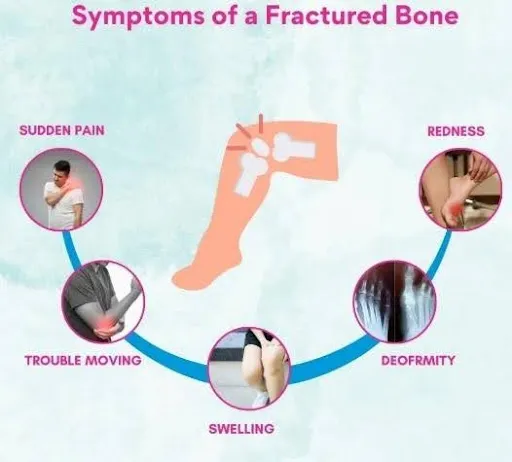
The signs of a fracture may include:
- Pain or swelling in the affected limb
- Noticeable deformity in the injured area
- Difficulty moving or using the injured part normally
- Warmth, bruising, or redness around the injury site
How are fractures diagnosed in children?
Fractures are typically diagnosed in children using various diagnostic tests, which may include:
- X-ray
- Computed tomography (CT) scan
- Magnetic resonance imaging (MRI): Some fractures, like stress fractures, may not appear on an X-ray immediately. An MRI can detect smaller fractures before they worsen.
- Bone scan
Treatment of Fractures in Children
The treatment of children’s fractures can be determined depending on the fracture type, its location, and severity. Major treatment options for children’s fractures are as follows:
Casting and Splinting: Fractures of children can easily be treated through a cast or splint immobilizing the fractured bone to aid in healing. Casts usually offer more rigid support, although splints often come in handy for minor fractures or swelling purposes.
Reduction: In cases where the bone fragments are misaligned, a procedure called reduction may be necessary. This involves realigning the bone fragments, which can be done manually (closed reduction) or surgically (open reduction).
Surgery: Severe fractures, particularly those involving the growth plate or multiple bone fragments, may require surgical intervention. Surgeons may use pins, screws, or plates to stabilize the bone.
Pain Management: Pain management is also a significant aspect of fracture treatment. Seek a doctor’s attention immediately.
Physical Therapy: Following the initiation of healing in the bone, physical therapy can be applied to help regain strength, flexibility, and range of motion. This is especially important for fractures involving joints.
Recovery and Rehabilitation: Recovery in children is often faster than adults because their bones heal more easily. However, several factors might influence the length of recovery. These include the type and location of the fracture, the child’s age, and how well they adhere to treatment recommendations.
Healing Time: A simple fracture may heal as early as 3-6 weeks, while a more complicated fracture may take several months to heal. The growth plate fractures need close observation to ensure proper healing.
Follow-Up Care: A regular follow-up with the healthcare provider is very essential for monitoring the healing process and making any necessary changes to the treatment plan.
Activity Limitation: In recovery, children have to limit some of their activities to avoid further injury. This is the time when the child should be adhered to by the doctor in terms of returning to sports or other strenuous activities.
Nutrition: Balanced diet with a lot of calcium and vitamin D helps in the healing of the bones. Some foods that could be encouraged are dairy products, leafy greens, and fortified cereals.
Why Prompt Treatment is Crucial for Growing Bones?
Children’s bones are still growing, so it’s imperative that fractures be treated right away. Damage to the “growth plates”—the cartilage regions at the ends of bones—can have a major effect on future bone development and, if left untreated, may result in deformities or differences in limb length.
Conclusion
Fractures in children are common but need careful management to ensure proper healing and avoid potential complications. By learning about the different types of fractures, treatment options, and recovery steps, parents and caregivers can support their child’s recovery and help them get back to their usual activities. If your child experiences a fracture, it’s important to seek immediate medical care and follow the recommended treatment plan for the best results.