
Understanding Seasonal Allergies in Kids: Signs, Symptoms, Triggers, Diagnosis and Treatments
Seasonal allergies in children are more than just sneezing and sniffles—they can disrupt sleep, school, and everyday joy. Often triggered by pollen, dust, or mold, these allergies appear with the changing seasons and may mimic a common cold.
Understanding the triggers, symptoms, and treatment options—guided by a pediatric allergist—can help manage them effectively. Here’s what every parent should know.
Understanding seasonal allergies
Seasonal changes, such as blooming trees and flower buds, excite us. However, autumn and spring also bring itchy eyes, sneezing fits, and constant sniffles in many children, which are signs of seasonal allergies—a common problem among children that affects their daily life, sleep, and overall happiness.
Seasonal allergies, sometimes called “hay fever” or “seasonal allergic rhinitis,” in kids occur when their immune system overreacts to substances in the air, usually pollen from grasses, weeds, and trees, something that’s usually not harmful.
When a kid touches, eats, or inhales something you are allergic to, that kid’s body thinks it’s harmful and reacts to try to get rid of it.
This can cause minor reactions like sniffling, itching, and sneezing; however, in some cases, untreated seasonal allergies cause worsening symptoms like chronic congestion, asthma flare-ups, and increased risk of sinus infections.
Common Triggers in Children
 Causes Of Seasonal Allergies In Babies
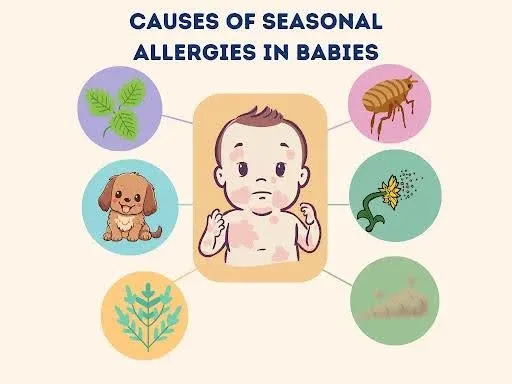
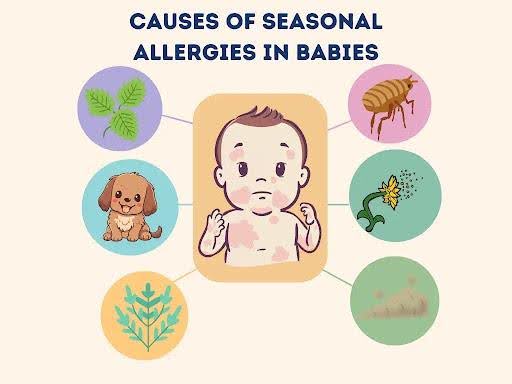
Indoor allergens
• Dust
• Fungi
• Latex
• Furry animals
• Certain foods (eggs, peanuts, milk, and milk products)
• Clothing and toys that are stuffed, trimmed, or made with animal hair
Outdoor allergens
• Weed pollen
• Mold spores
• Tree
• Grass
• Insect bites or stings
Symptoms and Diagnosis
 Common Symptoms Of Seasonal Allergies In Children
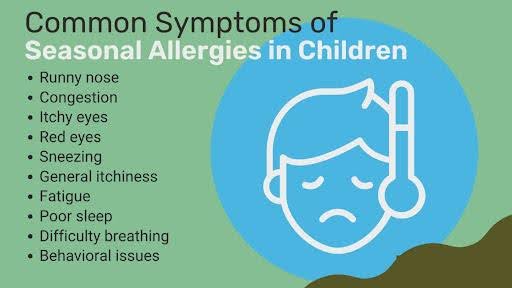
Symptoms: At first, symptoms may look like a cold, but they tend to linger and follow a pattern each year. Common signs include:
• Runny or stuffy nose
• Sneezing
• Throat clearing
• Nose rubbing
• Sniffling
• Itchy, watery eyes
• Nasal stuffiness
• Dry cough
• Throat clearing
• Itching or tingling sensation in the throat and mouth
• Fatigue
Other problems are sleep disturbances leading to fatigue and poor concentration, affecting school performance. Severe, life-threatening reactions like anaphylaxis are also a rare but possible complication.
Diagnosis: Diagnosis may involve:
• Assessment of health history
• A physical exam and health history
• Blood tests to measure allergic reactions
Treatment and Prevention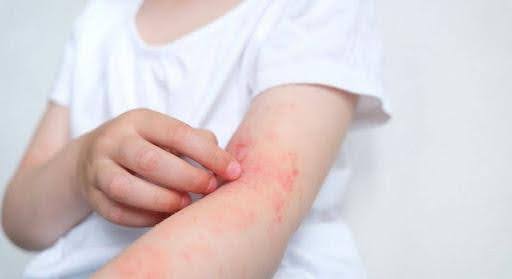 Treatment and Prevention
Treatment: Treating seasonal allergies in kids involves:
• Medications
Antihistamines are given to manage the symptoms of itching, sneezing, and a runny nose. Nasal corticosteroids are given to reduce the nasal inflammation when used consistently. Saline nasal rinses are prescribed to flush out allergens from the nasal passages and can be a simple, drug-free option for relief.
• Immunotherapy
Allergy shots to build tolerance over time
Prevention: Avoidance techniques:
• Use air purifiers
• Limit outdoor activities
• Avoid hanging laundry outside to dry
• Have your child take a bath at bedtime to reduce nighttime allergy problems
• Encourage your child to wash their face and hands immediately after playing outside to prevent rubbing pollen into their nose and eyes
• Keep windows in the car and home closed
New advances in allergy care
Latest advances in current and emerging treatment options for children with food allergies in pediatric allergy care include:
• Epicutaneous immunotherapy (EPIT) (skin patch)
• New oral immunotherapy (OIT)
• Environmental allergy treatment
• Subcutaneous immunotherapy (SCIT)
• Sublingual immunotherapy (SLIT)
• Biologics
Home and lifestyle adjustments
• Use air conditioners to reduce pollen exposure in both the home and the car.
• Kids with mold allergies should avoid playing in piles of dead leaves in the fall, as molds are common in late summer and spring.
• Dust mites gather in places with flakes of human skin, such as sofas, beds, and carpets.
• To prevent dust mite exposure, keep bedding and soft toys clean, use dust-mite-proof covers, and vacuum carpets and furniture regularly.
• Ensure your child stays well hydrated.
• Use warm compresses as needed.
Conclusion
Seasonal allergies in kids, triggered by pollen, dust, and mold, can lead to persistent symptoms like sneezing, itchy eyes, and fatigue, affecting daily life and school performance. With proper diagnosis, preventive steps, and treatments like antihistamines, nasal sprays, and immunotherapy, most children find relief. For ongoing or severe symptoms, consulting a pediatric allergist ensures personalized care and access to the latest advances in allergy management.