Phimosis in Boys: When Is Surgery Necessary? Phimosis is a common condition in boys where the foreskin over the penis cannot be pulled back completely. It is a natural physiological stage in infancy and childhood, often resolving on its own as a child grows. However, in some cases, phimosis can persist or become problematic, requiring medical intervention, including surgery. Understanding when surgery is necessary is essential for parents and caregivers.
Understanding Phimosis and its causes Physiological Phimosis
Most newborn boys have a foreskin that cannot be retracted, this is called physiological phimosis. This occurs due to natural adhesions between the foreskin and glans (head of the penis) and is absolutely normal. Over a period of time, these adhesions break down, and by the age of 3 to 5 years, most boys can partially or fully retract their foreskin. However, for some, this process may take a longer.
Pathological Phimosis
In some cases, phimosis results from scarring, infection, or inflammation. This is known as pathological phimosis, and unlike physiological phimosis, it often requires medical attention. Some causes of pathological phimosis include-
Balanoposthitis: Inflammation or infection of the foreskin and glans.
Recurrent infections: Frequent foreskin infections that can lead to scarring and tightening.
Forcible retraction: Attempting to pull back the foreskin forcibly can cause small tears that heal with scar tissue, worsening the condition.
Lichen sclerosus (Balanitis Xerotica Obliterans – BXO): A chronic inflammatory condition that leads to foreskin tightening and scarring.
Skin conditions: Other skin conditions such as lichen planus, eczema, and psoriasis may also present with phimosis. Diabetes Mellitus: In rare cases, undiagnosed diabetes in older children can lead to recurrent infections and phimosis.
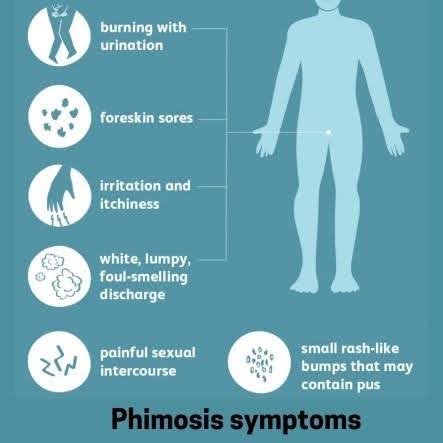
The foreskin of the penis that can be easily pulled back in normal conditions, can not be pulled back in phimosis. This leads to a baggy appearance of prepuce with thickening of skin around the penis tip. If this typical finding is associated with other symptoms, then medical evaluation may be necessary. The below symptoms should warn a parent:
Pain during urination
Ballooning of the foreskin during urination due to urine-trapping
Recurring infections
Discolouration of the penis
Pain during erection
White scarring or thickening of the foreskin
A weak stream of urine
Blood in urine
If these symptoms occur, medical evaluation is necessary to determine the appropriate treatment, or else complications may follow.
The Complications of Phimosis
Phimosis if unattended can lead to the following complications:
Urinary tract infections due to poor hygiene
Obstructed urinary symptoms- Chronic phimosis may lead to incomplete bladder emptying and urinary retention.
Paraphimosis – A medical emergency where the retracted foreskin cannot return to its normal position, impeding blood flow of the glans.
Psychological Stress – Older children and adolescents may experience embarrassment or distress related to phimosis.
Scarring and Thickening of the Foreskin – Repeated unattended inflammation or trauma can lead to fibrosis, making the condition worse.
Risk of penile cancer- Persistent phimosis has been associated with a higher risk of penile cancer due to poor hygiene and chronic inflammation.
How is Phimosis treated?
The treatment for phimosis depends on the severity of the condition. Both surgical and non-surgical measures can be employed for treating this condition, however, in most cases, the non-surgical methods are tried first.
Conservative (Non-Surgical) Treatment
These include:
Topical Steroid Creams and Gentle Stretching Exercises
A common first-line treatment for phimosis is topical steroid creams. These are applied to the foreskin as prescribed and reduce inflammation, help soften and stretch the skin, allowing gradual retraction. Along with the creams gentle exercises are prescribed which allow stretching of the foreskin over time. As the condition improves the steroid is applied to the newly exposed area as well. This can gradually improve elasticity and resolve mild cases of phimosis. The exercises should only be performed as guided by a healthcare provider.
Other medications like antibiotics may be prescribed in case of infections.
Good Hygiene Practices
Maintaining good genital hygiene and avoiding harsh soaps is recommended to prevent infections and irritation of the penis, thereby, reducing the risk of pathological phimosis.
Surgical Treatment: When Is Surgery Necessary?
If conservative treatments fail or if the child experiences severe symptoms, surgery may be required.
Circumcision
Circumcision or postectomy is widely performed for phimosis, during this procedure the foreskin is completely removed. Circumcision is the most definitive treatment for severe or recurrent phimosis and is aimed to prevent complications of this condition. In case a pediatric surgeon diagnoses phimosis which may not resolve naturally, they may recommend circumcision. Other common conditions where it could be advised include:
-Recurrent balanoposthitis
-Scarring due to Lichen sclerosis
-Severe painful phimosis interfering with urination or erections
-Failure of non-surgical treatment
How is Circumcision performed?
A pediatric urologist carefully performes circumcision under sedation. Local or general anesthesia can be used depending on the patient’s age. The surgery is simple and quick and consists of removing excess skin so that the glans can be exposed.
In addition to anesthesia for the procedure, a penile nerve blocker may also be used by your urologist to ensure that the child does not feel any discomfort during the procedure.
In the case of pathological phimosis, 5-10 years is a good time when a child can undergo circumcision for treatment.
Healing and Postoperative care
Healing after circumcision requires 7-10 days. There may be some discomfort during the recovery period which can be minimised with postoperative care. Below is how the wound can be cared for
Pain management: Apart from the medicines prescribed by the doctor after the procedure, parents can discuss the usage of over-the-counter painkillers for their children. These too should be taken on the doctor’s prescription as per the weight of the child.
Wound care: Keeping the surgical site clean and applying prescribed ointments aid in healing. The wound should be kept clean at all times in the immediate days following the postoperative period.
Avoiding strenuous activity: Physical exertion should be limited for at least 1-2 weeks.
Monitoring for complications: Signs of infection such as redness, swelling, or pus should be reported to the doctor immediately.
Benefits of Surgery
Surgical correction for phimosis can help in:
Permanent resolution of phimosis
Elimination of recurrent infections
Improved hygiene and reduced risk of urinary tract infections (UTIs)
Lower risk of penile cancer and sexually transmitted infections in the long term
Alternative surgical options apart from Circumcision
Preputioplasty
A less invasive surgical option for the treatment of phimosis is preputioplasty. This procedure involves a minor surgical procedure that widens the foreskin without removing it. It is suitable for mild to moderate phimosis and can be done in cases where parents prefer foreskin preservation due to personal reasons. The possibility of such a procedure helping in a specific child’s condition should be discussed with the doctor.
Dorsal Slit Procedure
This is yet another procedure that is used in treating phimosis. It involves making a small incision to relieve tightness, but it is usually reserved for emergency situations including paraphimosis.
Can Phimosis be prevented?
Parents always look for the prevention of unwanted conditions in their children. Past the age of physiological phimosis, circumcision can help prevent pathologic phimosis.
Other ways to prevent pathological phimosis include, keeping your child’s penis clean. Since infections are the most common cause of pathologic phimosis, keeping it hygienic can prevent infections and thus phimosis. As children grow up and can take a bath on their own the correct way to clean the penis should be taught to them by the caregivers.
Penile hygiene can be maintained by cleansing the foreskin and glans during baths. After urinating and bathing, the foreskin should be pulled back over the head of the penis to prevent paraphimosis.
What parents should remember?
Phimosis is a common condition in boys, often resolving naturally with age. However, when it leads to discomfort, infections, or scarring, medical intervention becomes necessary. Parents should consult a pediatric urologist to determine the best course of action for their child. With proper management, phimosis can be treated effectively, ensuring the child’s comfort and well-being.
Our healthcare specialists are equipped with the knowledge and skills to provide you with the support you require. From consultation to diagnosis to treatments, our experts are dedicated to helping you.