Vaccines and Autism: What is the Truth?
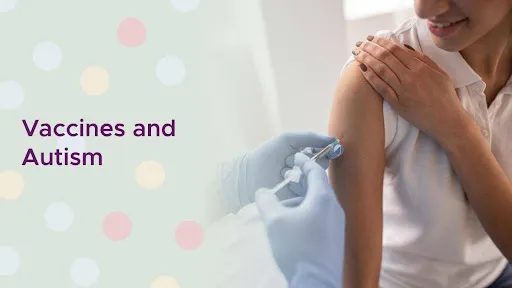
A very common belief that prevails amongst parents is that vaccines can cause Autism! Parents want the best for their children, but the flood of mixed messages on social media, blogs, and word-of-mouth can cause worry. The question is- Do vaccines cause autism? The short answer, based on decades of high-quality scientific research, is No. Vaccines do not cause autism. But yes, it’s worth exploring why this myth began and what science tells us today, to ensure parents can confidently opt for vaccines. Parents should remember that vaccinating children remains one of the most important steps that can be taken to protect children from serious diseases.
A very common belief that prevails amongst parents is that vaccines can cause Autism! Parents want the best for their children, but the flood of mixed messages on social media, blogs, and word-of-mouth can cause worry. The question is- Do vaccines cause autism? The short answer, based on decades of high-quality scientific research, is No. Vaccines do not cause autism. But yes, it’s worth exploring why this myth began and what science tells us today, to ensure parents can confidently opt for vaccines. Parents should remember that vaccinating children remains one of the most important steps that can be taken to protect children from serious diseases.
Where Did this Myth Come From?
The fear that vaccines could be linked to autism arose due to a single, now-discredited study published in 1998 by Andrew Wakefield and colleagues. That paper suggested a connection between the MMR (measles, mumps, rubella) vaccine and autism.
Important points to note about the study-
- The study included only 12 children, far too few for reliable conclusions.
- Investigations later revealed serious ethical violations and data manipulation in the study.
- The journal that published it, The Lancet, officially retracted the study in 2010.
- Wakefield lost his medical license.
Despite being proven wrong, the myth spread and was amplified by media coverage and the internet.
What Science Says
Since the 1990s, numerous studies involving hundreds and thousands of children worldwide have looked at vaccines and autism. Every major study has concluded that there is no link.
- A study done in Denmark in 2002 studied 537303 children and proved that MMR vaccine does not cause autism
- A Danish study (2019) that followed over 650,000 children. This showed no difference in autism rates between vaccinated and unvaccinated children.
- Institute of Medicine (US, 2004 & 2011) reviewed all available evidence and concluded vaccines are safe and not linked to autism.
- The World Health Organization (WHO), the Center for Disease Control and Prevention (CDC), and the Indian Academy of Pediatrics (IAP) all strongly affirm that vaccines do not cause autism.
Can Autism Appear Around the Same Time as Vaccinations?
Yet another confusion that can add to parents’ anxiety is that autism spectrum disorder (ASD) usually becomes noticeable between 18 months and 3 years, the same period when children receive several vaccines. This timing overlap is one major reason parents associate the two events. However, parents should remember that this is the age when most children begin expressing themselves more freely, which is why the diagnosis of autism is made at this age, which is also the time for multiple vaccinations. Also, research shows autism has genetic and developmental origins that begin much earlier, even before birth. Vaccines do not change brain development.
Ingredients in Vaccines
Parents often worry about what’s in vaccines and whether they could cause an alteration in the development of their child. Vaccines are made up of carefully selected ingredients that help train the immune system to recognize and fight diseases. The main component is the antigen, which is a small part of the virus or bacteria (or something that mimics it) to safely trigger an immune response. Along with this, vaccines may contain stabilizers to keep them effective during storage, preservatives to prevent contamination, and adjuvants that help boost the body’s response. All these ingredients are used in very small, regulated amounts and are thoroughly tested for safety before approval.
The Real Risk is not vaccinating the Child!
Choosing to delay or avoid vaccines does not reduce autism risk, but it does increase the risk of serious illness, which can be easily prevented with vaccines.
- Measles can cause brain inflammation, and even death.
- Meningitis which can cause damage to the brain with life long effects
- Pneumonia which if severe may land up the child on ventilator
- Pertussis (whooping cough) is especially dangerous for infants.
- Polio, once nearly eradicated, can cause lifelong paralysis.
Recent outbreaks in communities with low vaccination rates show how quickly these diseases can return.
Why the Myth Still Persists?
The new age of the internet is preventing this myth from dying down.
- Misinformation online spreads faster than scientific corrections.
- Celebrities and influencers sometimes amplify fears, and may be unscientific sources that many people rely on.
- Parents of children with autism naturally search for answers, and vaccines often appear as a visible “trigger” because of timing.
What Parents Should Know?
- Trust reliable sources: WHO, CDC, IAP, and your pediatrician.
- Ask questions: Doctors are used to discussing vaccine safety and will happily explain you.
- Keep the schedule: Follow your child’s national immunization program, and ensure your child is safe and protected.
- Stay updated: New vaccines are constantly being added to protect children from preventable diseases. Discuss them with your pediatrician.
There is no doubt remaining in the fact that vaccines do not cause autism. The 1998 study that sparked the fear has been debunked, and overwhelming evidence from millions of children worldwide proves vaccines are safe. Autism is a complex developmental condition with roots in genetics, brain biology and environmental interaction, not in vaccinations. Rather than fearing vaccines, parents can feel confident knowing they are giving their child one of the strongest shields against life-threatening diseases.
Why choose Ankura?
Ankura Hospital for Women and Children has the best team of pediatricians who are committed to providing empathetic and quality care for babies and children. We offer the most advanced and world-class setup for child care, where every child is treated with personalized care, clinical excellence, and compassion. Our multidisciplinary team comprises all pediatric super-specialists under a single roof to provide holistic care for children of all ages in a comforting environment. At Ankura, we believe in a family-centered approach, ensuring parents are involved in every step of the care process. With state-of-the-art diagnostic tools, child-friendly facilities, and 24/7 pediatric support, Ankura remains a trusted destination for children’s health.