
Pediatric Bone Cancers in India: Early Detection and Multidisciplinary Treatment Approaches
Bone cancers in children, though rare compared to adult malignancies, present unique clinical challenges. They often present mildly and are mistaken for benign orthopedic conditions, and can rapidly progress if undetected. In India, pediatric bone cancers make up a significant portion of childhood malignancies, with osteosarcoma and Ewing sarcoma being the most prevalent types. Timely diagnosis and multidisciplinary care are essential for improving outcomes of bone cancers in children.
Understanding Pediatric Bone Cancers
The Common Types
The Common Types
Pediatric bone cancers account for roughly 5% of all childhood cancers. The two primary types of bone cancers seen are:
Osteosarcoma: This is the most common malignant bone tumor in children and adolescents. It arises from immature bone-forming cells (osteoblasts) and typically occurs during periods of rapid growth, particularly in the second decade of life. Boys are slightly more affected than girls, and the tumor most commonly affects the long bones, especially around the knee (distal femur, proximal tibia) and upper arm (proximal humerus).
Symptoms of Osteosarcoma
Early symptoms of osteosarcoma are often vague and may resemble sports injuries or growing pains, which leads to delayed diagnosis. Common symptoms that should prompt a medical consultation include:
- Persistent bone pain, often worsening at night
- Swelling or a noticeable lump over the affected bone
- Decreased joint movement or limping
- Sometimes, a pathological fracture after minimal trauma
Ewing Sarcoma: Ewing’s sarcoma is the second most common malignant bone tumor in children and adolescents after osteosarcoma. It is an aggressive cancer that typically originates in the bones but can also develop in soft tissues. This cancer most often affects children and young adults between the ages of 10 and 20, with a slight male predominance.
The common sites where it can occur include the pelvis (most frequent site), femur, chest wall (here it’s called Askin’s tumor), ribs, spine, and other flat bones.
Unlike osteosarcoma, Ewing’s sarcoma frequently affects axial skeletons and midline bones.
Symptoms of Ewing’s Sarcoma
Ewing’s sarcoma can have a subtle onset and is often mistaken for infections or injuries. Symptoms include:
- Persistent, localized bone pain
- Swelling or warmth over the tumor site
- Limping or restricted movement
- Fever, fatigue, or weight loss (constitutional symptoms)
- Occasionally, a palpable mass
Both the above cancers more commonly present in children between the ages of 10 and 20, with a slightly higher prevalence in males, though they can manifest at younger age as well.
Risk Factors for Pediatric Bone Cancers
The exact cause of pediatric bone cancers remains unknown. However, several genetic, environmental, and biological factors have been identified that may increase a child’s risk of developing these malignancies:
1. Genetic Syndromes and Mutations
Certain inherited genetic conditions significantly increase the risk of bone cancers.
1. Genetic Syndromes and Mutations
Certain inherited genetic conditions significantly increase the risk of bone cancers.
Li-Fraumeni syndrome: Caused by mutations in the TP53 gene, it predisposes individuals to a range of cancers including osteosarcoma.
Hereditary retinoblastoma: A mutation in the RB1 gene not only causes eye tumors in infants but also increases the likelihood of osteosarcoma later in childhood.
2. Previous Radiation Exposure
2. Previous Radiation Exposure
Children who have received radiation therapy for other cancers, particularly to bones or surrounding tissues, have a higher chance of developing secondary bone malignancies, especially osteosarcoma.
3. Rapid Bone Growth
3. Rapid Bone Growth
Periods of accelerated growth during adolescence may contribute to the development of bone cancers. This is supported by the fact that osteosarcoma commonly arises during the growth spurts of puberty, particularly in the metaphyseal regions of long bones.
4. Gender and Age
4. Gender and Age
Osteosarcoma is slightly more common in males; this is likely due to their longer bone growth periods.
Ewing’s sarcoma tends to occur in children and adolescents aged 10–20 years, with a male predominance as well.
5. Environmental and Occupational Exposures
5. Environmental and Occupational Exposures
Although not commonly established in children, the occurrence of pediatric bone cancers can be associated with exposure to pesticides or herbicides and contact with industrial chemicals.
6. Bone Diseases and Implants
6. Bone Diseases and Implants
Chronic bone conditions like Paget’s disease and metallic implants used in orthopedic surgeries have been linked with the development of osteosarcoma, although these are exceedingly rare in pediatric populations.
Challenges in Early Detection
It is extremely crucial to detect bone cancers early since it progresses rapidly. Unfortunately, delayed diagnosis is still common due to certain factors:
- Low awareness among parents and primary care providers
- Misdiagnosis of cancer symptoms such as sports injuries or growing pains
- Limited information about specialised pediatric care
A delay in diagnosis results in the progression of bone cancers to the advanced stage. This significantly impacts the prognosis (long-term outcomes)
How are Bone Cancers Diagnosed?
In case of suspicion of bone cancer, a detailed clinical history and physical examination follow. The pediatric oncologist and haematologist can then prescribe imaging tests like X-rays, MRI, and CT scans to assess the extent of involvement and metastasis of cancer. Other tests that may be needed include:
Biopsy- A core needle or open biopsy is crucial and should be performed by a specialized surgical team to avoid jeopardizing future limb salvage.
Bone scan or PET-CT: To detect metastases
Blood investigations: Including LDH, ESR, and complete blood counts
Multidisciplinary Treatment Approaches for Bone Cancer
Multidisciplinary Treatment Approaches for Bone Cancer
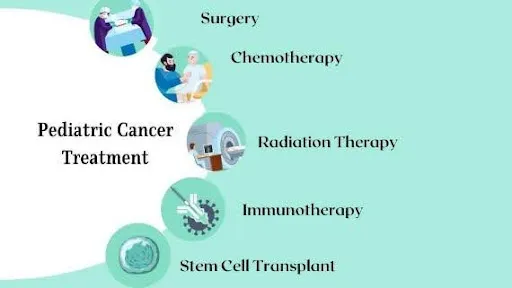
The management of pediatric bone cancers demands a collaborative approach involving pediatric oncologists, orthopedic oncologists, radiologists, pathologists, and rehabilitation specialists. Some approaches that are employed for bone cancers include:
- Neoadjuvant Chemotherapy- Neoadjuvant chemotherapy is administered before the main treatment, usually surgery, to shrink tumors and eliminate microscopic disease. In pediatric bone cancers like osteosarcoma and Ewing sarcoma, it helps improve surgical outcomes, facilitates limb-salvage procedures, and targets early metastases. This approach also allows clinicians to assess tumor response, aiding in further treatment planning.
- Surgical Management- Surgical management in pediatric bone cancers focuses on complete tumor removal while preserving limb function. Limb-salvage surgery is preferred over amputation when oncologically safe, using techniques like wide resection and reconstruction with grafts or prostheses. The goal is to achieve local tumor control and restore mobility with minimal functional loss.
- Adjuvant Chemotherapy- Adjuvant chemotherapy is administered after surgical tumor removal to eliminate any remaining microscopic cancer cells. It significantly reduces the risk of recurrence and improves long-term survival, especially in aggressive tumors like osteosarcoma and Ewing sarcoma.
- Radiotherapy- Radiotherapy uses high-energy radiation to target and destroy cancer cells. It is especially effective in treating Ewing sarcoma due to its radiosensitivity and is often used when surgery is not feasible or as an adjunct to reduce residual disease.
- Rehabilitation and Psychological Support- Post-treatment rehabilitation focuses on physical recovery through physiotherapy to restore mobility and function. Equally vital is psychological support, which helps children and families cope with the emotional impact of cancer, fostering resilience and improving overall quality of life.
Advances in Pediatric Bone Cancer Care in India
Growing Number of Specialized Centers- Major metros now host dedicated pediatric oncology units equipped with advanced diagnostics, surgical tools, and chemotherapy protocols. With the usage of telemedicine, patients and doctors at rural centers can now easily avail a pediatric oncologist opinion and refer children for specialised care when needed.
Use of Targeted Therapy and Immunotherapy- Research is exploring targeted molecular therapies and immunotherapeutic options, particularly in recurrent or refractory cases.
Improvements in Limb Salvage Surgery- Advancements in surgical techniques and prosthetic design have dramatically improved outcomes, both functionally and cosmetically. It is now possible to save the limb while getting rid of the cancer.
Role of Artificial Intelligence (AI)- AI-driven imaging and diagnostic tools are showing promise in early identification and prognostication.
Importance of Early Detection and Awareness
School health programs, awareness campaigns among pediatricians and general practitioners, and parental education are key elements in helping the community become aware of bone cancers in children. Emphasis should be on early referral and prompt imaging for persistent bone pain or swelling lasting more than 2 weeks.
Long-Term Health in Bone Cancers
With modern treatments, 5-year survival for localized osteosarcoma can exceed 70%.
Ewing sarcoma has a slightly poorer prognosis but still shows significant improvement with intensive multimodal therapy.
Outcomes drop drastically with metastatic or recurrent disease, emphasizing the importance of early detection.
Pediatric bone cancers, while challenging, are treatable with timely diagnosis and comprehensive care. In India, bridging the gap between rural and urban access, increasing awareness, and expanding multidisciplinary centers can make a decisive difference. A future where every child has access to early diagnosis, advanced treatment, and holistic care is within reach.