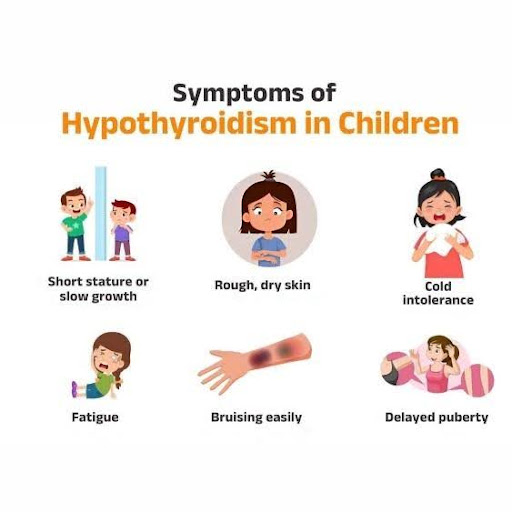
Hypothyroidism is a condition characterized by insufficient production of thyroid hormones. In infants, it can lead to poor feeding and failure to grow, while in older children and adolescents, the symptoms are similar to those seen in adults, but may also include growth failure and delayed puberty, or both.
What is Hypothyroidism in Children?
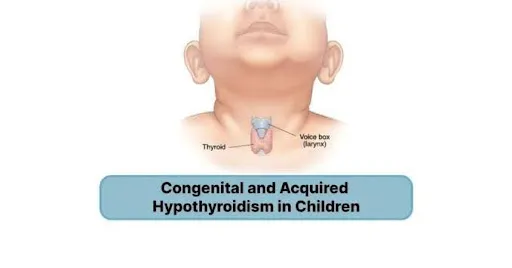
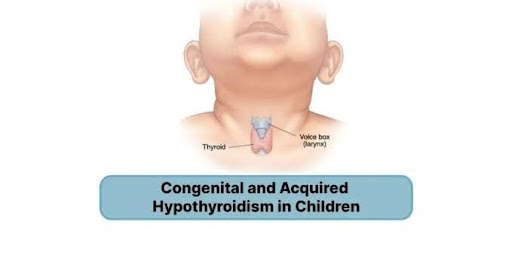
Hypothyroidism in children is a common endocrine disorder in which a child’s thyroid gland does not produce enough thyroid hormone. A child with an underactive thyroid might face symptoms such as fatigue, weight gain, constipation, slowed growth, and other related issues. The thyroid, a small, butterfly-shaped gland located at the front of the neck just below the Adam’s apple, produces hormones that influence many aspects of your child’s health, including heart rate, energy metabolism (how efficiently the body uses calories), and overall growth and development.
Types and Causes of hypothyroidism
Congenital Hypothyroidism
Congenital and Acquired Hypothyroidism in Children Congenital hypothyroidism (CH) happens when the thyroid gland doesn’t develop or work properly before birth. It’s a common condition, affecting about 1 in every 2,500 to 3,000 babies. Several factors, such as family history, the child’s physical exam, the severity of hypothyroidism at the time of diagnosis, and the treatment given during the first few years of life, will help the doctor to determine if the condition is inherited and if long-term treatment is needed.
Acquired hypothyroidism is commonly caused by an autoimmune condition called chronic lymphocytic thyroiditis (CLT). In this condition, the child’s immune system mistakenly attacks the thyroid gland, causing damage and reducing its function. The disorder was first described by Japanese doctor Hakaru Hashimoto, so it is often known as Hashimoto’s thyroiditis. CLT is more common in girls than boys and occurs more frequently in adolescents than in younger children.
Iatrogenic Hypothyroidism
Iatrogenic hypothyroidism is a type of acquired hypothyroidism that happens in children who have had their thyroid gland either destroyed through medical treatment or surgically removed. Without the thyroid gland, the body stops producing thyroid hormones, resulting in iatrogenic hypothyroidism.
Central Hypothyroidism
Central hypothyroidism happens when the brain fails to produce thyroid-stimulating hormone (TSH), which signals the thyroid gland to function. This condition is much rarer than other thyroid-related disorders.
Enlarged thyroid causing a goiter-like growth on the neck
Heavier menstrual flow and cramping in girls and young women
Testing and diagnosis
The diagnostic process starts with a detailed medical history and a physical exam of your child.
A thyroid function test, which is a blood test, checks the levels of thyroid hormone (T4) and thyroid-stimulating hormone (TSH).
Anti-thyroid antibody tests measure the levels of anti-thyroperoxidase (anti-TPO) and anti-thyroglobulin (TgAb), which are higher in autoimmune hypothyroidism. Unlike the antibody found in Graves’ disease (a form of hyperthyroidism), these antibodies don’t have any active role. Instead, they are used as markers to help diagnose the condition.
A thyroid ultrasound uses sound waves to create an image of your child’s thyroid and nearby lymph nodes.
Who should be tested for Hypothyroidism?
Children with poor growth (unhealthy height to weight ratio)
Children who have received cranial radiation as part of cancer treatments
Children who are obese (excess weight for their age)
Children with a history of severe brain injury or developmental issues
Anyone showing symptoms of hypothyroidism
All pregnant women with a family history of thyroid disease or symptoms of thyroid problems
Treatment
Replacement therapy with synthetic thyroid hormones is typically provided as a single daily tablet, usually prescribed by a pediatric endocrinologist. Thyroid hormones are essential for normal brain development in infants and children, so it’s crucial to administer the correct dose of synthetic hormone. Since the body may require higher doses over time, the child should be regularly retested to ensure they are receiving the right amount of hormone, with the dose adjusted as needed.
Conclusion
Most children with hypothyroidism who follow their medication plan can experience normal growth and development. Since thyroid hormone replacement is based on weight and age, more frequent check-ups are required while your child is still growing.
Our healthcare specialists are equipped with the knowledge and skills to provide you with the support you require. From consultation to diagnosis to treatments, our experts are dedicated to helping you.