Biliary Atresia
Have you seen that your baby's skin or eyes have been yellow for longer than usual? Mild jaundice is normal in newborns, but if it lasts for a long time, it could be a sign of a more serious condition called biliary atresia.
What Exactly is Biliary Atresia?
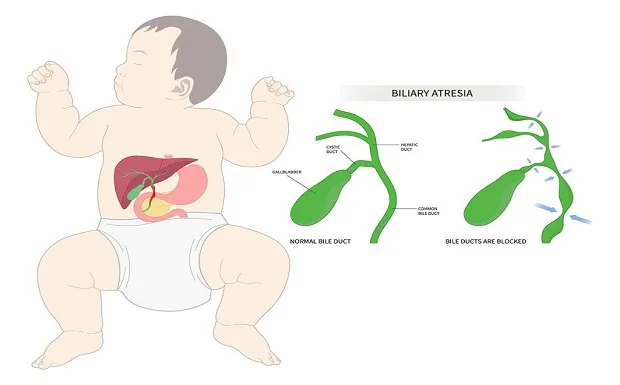
Biliary atresia is a rare but serious liver condition that affects babies. It occurs when the bile ducts—tiny tubes that carry bile from the liver to the intestine—are either blocked or absent.
Bile is crucial for breaking down food and getting rid of waste. If it can't flow properly, it builds up in the liver and can slowly harm it.
What Causes Biliary Atresia?
The exact cause is still not completely understood. Parents should know that it has nothing to do with what they did or didn't do during pregnancy.
Doctors and researchers believe a few factors may play a role. In some babies, the bile ducts may not develop normally before birth or may get damaged shortly after birth. Some people also think that certain viral infections could cause the condition in babies. Another option is that the baby's immune system could react in a way that causes inflammation and affects the bile ducts.
One comforting fact is that biliary atresia is not usually passed down through families.
Even though the exact cause is not clear, early diagnosis and treatment can make a significant difference in outcomes.
Signs and Symptoms to Watch For
It's not always easy to see biliary atresia right after birth, but some signs may start to show up over the next few weeks. For example, if your baby's jaundice (yellowing of the skin and eyes) doesn't go away after 2–3 weeks, that could be a sign. Mild jaundice is common in newborns, but persistent jaundice can be a sign. The color of your baby's stools is another important clue. If they appear pale, white, or clay-coloured instead of the usual yellow or green, it’s something that needs attention. Along with this, urine may appear darker than usual.
Some babies may also have difficulty gaining weight as expected, or you might notice that their abdomen looks slightly enlarged or swollen. Pale stools are one of the most important signs. If you notice pale stools, you should consult a doctor right away because getting treatment early can make a difference.
Why an Early Diagnosis Matters
Timing is crucial for biliary atresia. Early diagnosis lets doctors take action before the liver gets too damaged. The sooner the condition is found, the better the chances of improving bile flow and keeping the liver working. Delays in diagnosis can raise the risk of problems like liver cirrhosis and the need for a liver transplant.
How is biliary atresia diagnosed?
If your doctor thinks your baby has biliary atresia, they won't just do one test. Instead, they will usually suggest a number of tests to find out what's wrong and rule out other possible causes of jaundice that lasts a long time.
What does this process involve?
Blood tests: Your baby may first have blood tests to see how well the liver is working. These tests can give important information about liver health and bile flow.
Ultrasound: An ultrasound is often done next. This is a simple, painless imaging test that helps doctors look at the liver and bile ducts.
Hepatobiliary scan: In some cases, a hepatobiliary scan may be advised. This test shows how bile is moving out of the liver, which helps doctors see if there is a blockage.
Liver biopsy: A liver biopsy may be done if needed. This means taking a small piece of liver tissue and looking at it very closely to ensure the diagnosis.
These tests help doctors figure out what's wrong and rule out other possible causes of long-term jaundice as soon as possible.
Treatment for Biliary Atresia
The Kasai portoenterostomy is the main treatment for biliary atresia. This surgery makes a new path for bile to flow from the liver to the intestine. The surgery's success depends a lot on when it is done, which should be within the first 6 to 8 weeks of life. If the liver damage gets worse, a liver transplant may be needed later.
What Does Supportive Care Involve?
Along with surgery, supportive care is an important part of keeping your child healthy and helping them grow.
Nutritional support: Your child may need nutritional support because liver problems can affect how the body absorbs nutrients. A well-planned diet helps with healthy growth and development.
Vitamin supplementation: It is also often suggested, especially fat-soluble vitamins, because their absorption can be affected.
Regular checkups: It's also important to see the doctor regularly. These visits let the doctor keep an eye on your child's growth, liver function, and any other problems that may come up.
Together, these steps help ensure better overall outcomes and long-term well-being.
Living with Biliary Atresia
It can be hard to hear that your child has biliary atresia, but with the right care and treatment early on, many kids can live active lives.
Ongoing monitoring is an important part of the journey. Regular follow-ups let doctors keep a close eye on the liver's health, growth, and overall development.
As a parent, you play a crucial role in your child's care. This means watching for any new or changing symptoms, making sure your child eats the right foods to help them grow, and making sure they go to all of their regular check-ups.
Conclusion
Early diagnosis makes biliary atresia manageable even though it is a serious illness. Warning signs like prolonged jaundice and pale stools should be recognised early which can make a big difference. Right medical care and timely intervention can improve the health and quality of life in children with biliary atresia.
Why Choose Ankura for Pediatric Gastroenterology?
At Ankura Hospital for Women & Children, our pediatric gastroenterology specialists are committed to providing expert care for kids with digestive issues. Your child's health and future are what matter most to us. We guide them through every stage, ensuring we pinpoint the correct diagnosis and create a personalized treatment plan.
Ankura offers comprehensive management for conditions like biliary atresia. They achieve this through advanced diagnostic techniques, a commitment to child-focused care, and a collaborative, multidisciplinary approach.
We don't just stop at treatments; we also help families make lasting changes to their lifestyles and diets, all in the name of long-term well-being.